Spain Surpasses 50 GW Solar Power Capacity Milestone
Spain has officially surpassed the 50 GW milestone in solar power capacity, reinforcing its position as a major European renewable energy leader. According to recent data from grid operator REE, solar energy now accounts for 34% of the nation’s total electricity generation capacity. This achievement follows a record-breaking 2025, during which the country added nearly 9 GW of new photovoltaic installations. Despite this rapid expansion, grid congestion remains a significant hurdle for developers, with a vast majority of new connection requests facing rejection or delays.
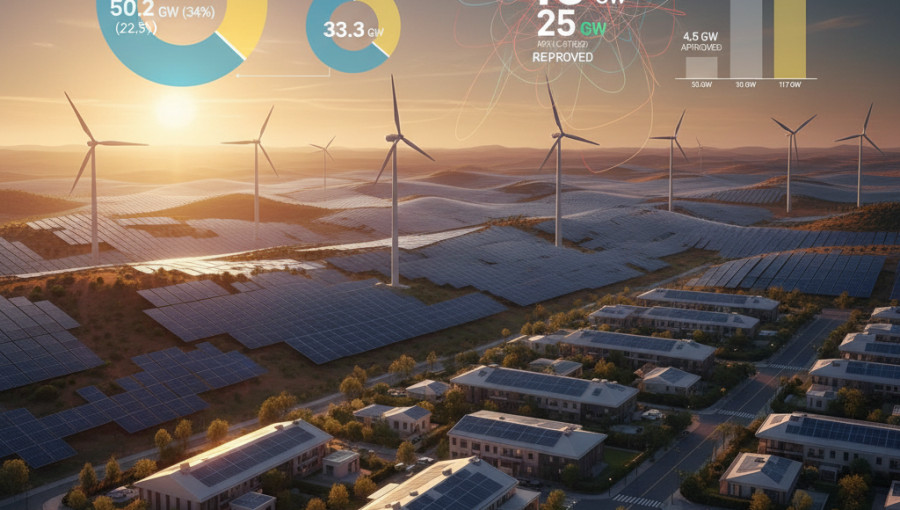
The current total solar capacity stands at 50.2 GW out of a national total of 147.8 GW. A significant portion of this growth is driven by the rise of prosumers and decentralized energy. While the Spanish solar industry association UNEF estimates cumulative self-consumption at 9.3 GW, REE figures place it slightly lower at 8.89 GW as of early February. In terms of actual production, solar energy contributed 18.4% to Spain's total electricity output throughout 2025.
Although Spain is a frontrunner in the Mediterranean, it still trails behind Germany, which maintains a solar fleet of 117 GW. Within Spain’s own borders, wind remains the second-largest power source with 33.3 GW, representing 22.5% of capacity. Other major contributors include combined-cycle gas at 26 GW, hydropower at 17 GW, and nuclear energy, which provides 7.1 GW or roughly 4.8% of the country’s total capacity.
The momentum for further expansion is high, but infrastructure limitations are creating significant bottlenecks. In 2025, developers sought grid access and connection permits for approximately 40 GW of new capacity. However, regulatory bodies approved only 4.5 GW. Grid congestion led to the rejection of 25 GW worth of projects, while another 8.5 GW of applications remain under review. This highlights a growing need for grid modernization to accommodate the influx of renewable energy projects and ensure the stability of the national energy transition.