Stellantis Begins Road Testing Solid State Battery Technology
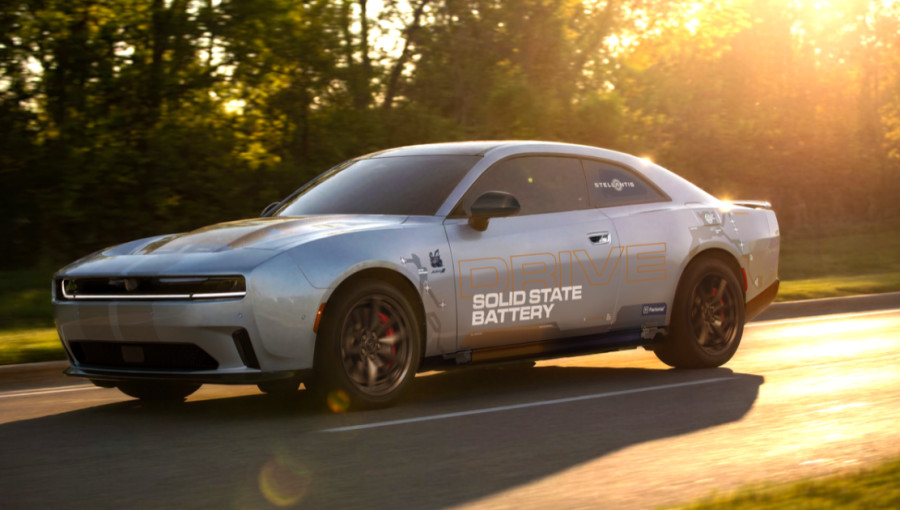
Stellantis has reached a significant milestone in electric vehicle development by initiating the first North American road tests of a solid-state battery integrated into a Dodge Charger. Developed in partnership with Factorial Energy, this technology utilizes Factorial Electrolyte System Technology (FEST) to replace traditional liquid electrolytes with a semi-solid hybrid. This advancement promises substantial improvements in energy density, faster charging capabilities, and enhanced thermal stability. While mass-market adoption remains a future goal, this successful integration into a road-going vehicle marks a critical transition from laboratory research to practical, real-world automotive application.
The transition of these cells from the lab to a vehicle required extensive engineering, as teams had to rework the battery pack’s mechanical architecture and control systems to accommodate the new technology. The resulting battery pack boasts an energy density of 375 watt-hours per kilogram, nearly doubling the capacity of many current electric vehicle batteries. Furthermore, the system is designed to maintain reliability across a wide temperature range, from -22 ºF to 113 ºF, and can recharge from 15 to 90 percent in approximately 18 minutes.
Beyond charging speed, the primary advantage of this solid-state technology is its superior efficiency. By utilizing a semi-solid matrix, the batteries can achieve high performance while being significantly lighter and more compact than conventional liquid-electrolyte packs. Factorial has previously estimated that such technology could reduce the weight of a standard electric vehicle battery by more than half, which in turn minimizes the need for heavy structural bracing. This weight reduction is a key factor in improving overall vehicle efficiency and range.
While major automakers are currently competing to be the first to bring solid-state electric vehicles to the mass market, the technology is already seeing limited commercial use. Verge Motorcycles, for instance, has begun shipping production-ready motorcycles equipped with solid-state packs developed by its spinoff, Donut Lab. As manufacturers like Stellantis, BMW, and Mercedes continue their testing programs, the industry is moving closer to a breakthrough that could redefine electric mobility. Although widespread availability is likely still a few years away, these initial road tests represent a vital step toward the next generation of high-performance, fast-charging electric vehicles.