UK Space Solar Power Economically Viable By 2040
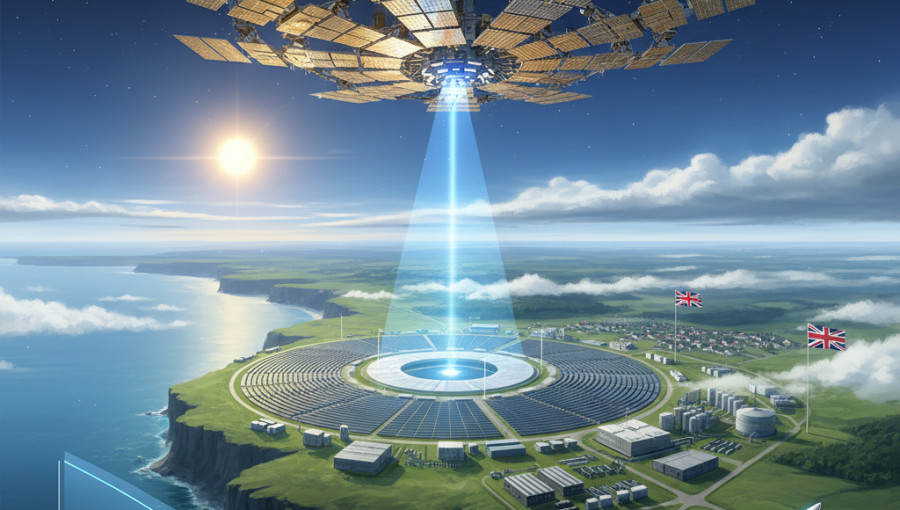
A new feasibility study commissioned by the UK government suggests that space-based solar power (SBSP) could become an economically viable energy source by 2040. As launch expenses are projected to decline significantly, electricity generated in orbit and beamed to Earth could compete with established technologies like nuclear and tidal power. The report highlights that while initial small-scale projects will require substantial public and private investment, the falling cost of orbital delivery and technical advancements could integrate space solar into the UK’s national energy strategy within the next two decades.
The levelized cost of electricity (LCOE) for orbital solar installations is expected to see a dramatic reduction over the next 15 years. Current estimates place the cost between £0.335 and £0.595 per kWh in 2030, but this figure is forecast to drop to a range of £0.087 to £0.129 per kWh by 2040. This shift would position the technology as a primary contender alongside other stable, low-carbon energy sources. The process involves capturing energy via solar panel arrays in space, converting the DC electricity into radio frequencies for transmission, and then reverting it back to DC power at ground-based receiving stations.
One of the primary advantages of SBSP is its ability to provide nearly constant energy, bypassing the intermittency issues associated with ground-based wind and solar power. The study found that satellites positioned in high elliptical orbits could supply power to the UK for approximately 95.7% of the year. When paired with battery energy storage systems at the receiving antennas, these systems could offer a continuous, baseload power supply for the grid.
The economic feasibility of the project relies heavily on the evolving aerospace industry, specifically the reduction of launch costs. The report identifies orbital transport as the single largest expense, accounting for over half of the LCOE variance. Modeling was based on the projected capabilities of SpaceX’s Starship, assuming a launch capacity of at least 100 tons to low-Earth orbit. Analysts predict that launch costs could fall to between £550 and £770 per kilogram by 2040, supported by a 30% linear decrease in operational expenses starting in 2030.
Furthermore, the study anticipates a significant decrease in the "hurdle rate"—the minimum return required by investors—as the technology matures and commercial risks subside. This rate is expected to fall from 20% in 2030 to roughly 9.1% by 2040. Such financial stability would allow SBSP projects to participate in the UK’s Contracts for Difference (CfD) scheme, providing a state-backed framework for long-term investment.
Beyond domestic grid support, the report identifies several global market opportunities for this technology. Small-scale systems could provide dedicated power for energy-intensive industries such as green hydrogen production, steel manufacturing, mining operations, and data centers. It could also serve as a critical power source for remote island nations. The report concludes that while early 2030s deployments will need heavy subsidies, these pioneering efforts will pave the way for large-scale systems by reducing technical risks and overall costs.