Wind Energy Provides Vital Lifeline For Texas Seniors
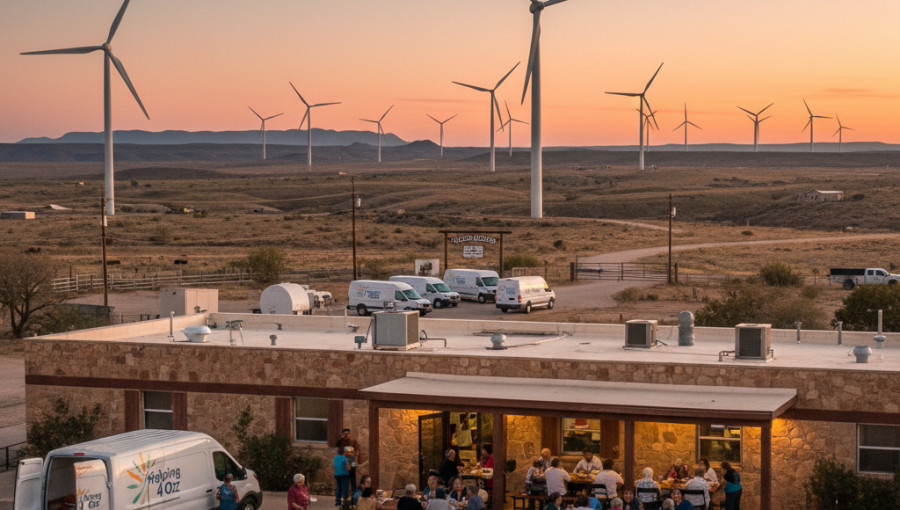
In the remote West Texas town of Ozona, wind energy has become a vital lifeline for the aging community. By utilizing strategic tax abatement agreements with renewable energy providers like NextEra Energy, Crockett County is securing funding for essential senior services. These resources support nutrition programs, social activities, and medical transportation, allowing elderly residents to remain in their homes despite the isolation of rural life. As federal funding for senior care fluctuates, the steady revenue from wind turbines offers a sustainable model for supporting vulnerable populations in transitioning energy landscapes.
At the Crockett County Senior Center, 75-year-old Cynthia Flores and her friends gather daily to share meals and socialize, a routine that anchors them to their hometown of Ozona. This unincorporated outpost, situated in a vast region covering 7,252 square kilometers, faces the typical challenges of the rural American West: extreme isolation, dwindling infrastructure, and limited access to healthcare. However, unlike many struggling rural areas, Ozona is leveraging its natural resources to ensure its older residents can age in place with dignity.
The financial backbone of these services is a series of partnerships with wind energy companies. Approximately 24.1 kilometers north of the town center, massive wind turbines operated by NextEra Energy dot the landscape. These installations are more than just power generators for the state's grid; they are significant contributors to the local economy through Section 312 of the Texas tax code. This "abatement act" allows the county to offer temporary property tax breaks to large-scale projects in exchange for immediate, direct investment into community programs.
Crockett County Judge Frank Tambunga has prioritized senior welfare during these negotiations. Rather than funding new bureaucratic departments, the county directs contributions toward existing nonprofits that provide immediate relief. This includes the "Helping Hands" program, a local initiative that delivers hot meals to homebound seniors. When federal funding for such programs was recently threatened by budget cuts and government shutdowns, a $20,000 donation from the wind industry allowed the service to continue without interruption.
Transportation remains another significant hurdle in a region where the nearest major city is a 90-minute drive away. For seniors requiring specialized medical treatments like dialysis or chemotherapy, the journey can be grueling and expensive. To address this, local advocates have established nonprofits like "Coz 4 Oz," which provides gas cards and lodging funds for medical travel. This year, the organization’s entire budget was covered by donations from wind energy partners, highlighting the shift from a total reliance on volatile oil and gas revenues to more consistent renewable energy funding.
While some residents remain skeptical about the long-term permanence of the wind boom, the immediate benefits are undeniable. For ranchers like Steve Wilkins, whose family has managed the land for four generations, leasing acreage for wind turbines offers a way to keep the property intact as oil production in the region matures and declines. For the seniors dancing at the center’s Valentine’s Day gala, the clean energy transition represents more than environmental policy—it is the practical support system that keeps their community whole.