
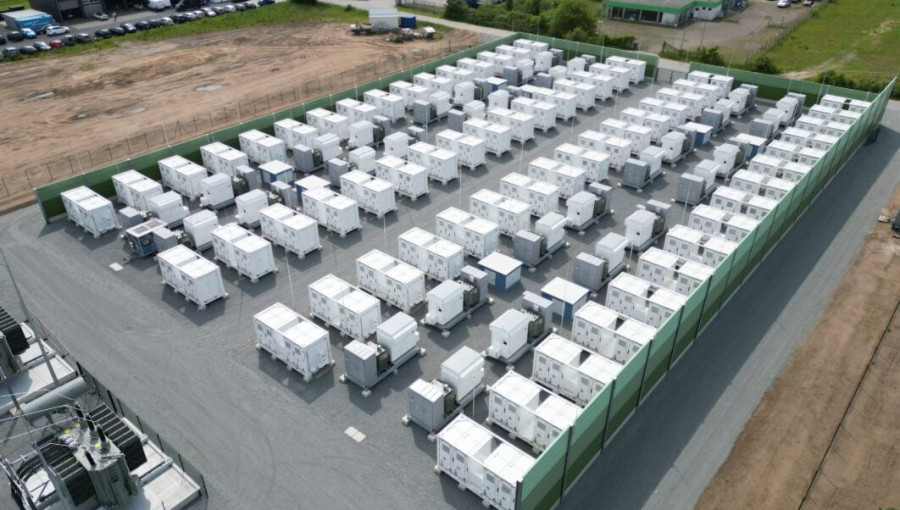
Germany is approaching a decisive turning point for its battery energy storage system (BESS) sector as 2026 looms as a critical year for regulatory clarity. Despite a recent surge in installed capacity to 24 GWh, the nation remains significantly behind the targets necessary for a successful energy transition. Industry experts warn that inconsistent policy shifts regarding grid connections, building privileges, and subsidy frameworks could stifle vital investment. As the current Renewable Energy Act expires, the government must finalize a cohesive strategy to integrate large-scale storage into a new capacity-based market design.
While Germany is currently recognized as one of the most active markets for battery storage globally, the current “storage miracle” is largely driven by small-scale installations. Large-scale systems with capacities exceeding 1 MWh account for only 3.5 GWh of the country’s total storage volume. This figure falls drastically short of the 104 GWh capacity that the Fraunhofer ISE research institute estimates will be required by 2030, a figure expected to rise to 180 GWh by 2045. To bridge this gap, nearly 700 grid connection requests totaling 250 gigawatts have been filed, yet their realization remains hampered by a volatile regulatory environment.
The legal landscape for BESS has been characterized by rapid and often contradictory changes. In late 2025, an amendment to the Energy Industry Act (EnWG) initially granted large-scale battery storage privileged status under building laws to accelerate project approvals. However, this was quickly followed by the Geothermal Energy Acceleration Act (GeoBG), which significantly tightened these criteria. Under the revised rules, only storage facilities located within a 200-meter radius of substations or in close proximity to major generation plants remain eligible for privileged status. This sudden policy shift has left many developers with projects that no longer fit the updated legal framework.
Grid connection procedures are also undergoing a major overhaul. The Federal Ministry for Economic Affairs and Energy (BMWK) recently moved to abolish the “first come, first served” principle for projects of 100 MW or more to clear the queue of “zombie” projects—developments that have secured a spot but lack a realistic path to completion. While this aims to streamline the process, the lack of immediate replacement mechanisms has created a temporary regulatory vacuum. A formal consultation on new, standardized grid connection criteria is scheduled for the first quarter of 2026, extending the period of uncertainty for investors.
The end of 2026 represents a “moment of truth” due to the expiration of the European Union’s state aid approval for Germany’s Renewable Energy Act (EEG) 2023. This deadline necessitates a shift from a system focused on subsidizing power generation to a market design that prioritizes flexibility and capacity. As part of this transition, Germany plans to launch tenders for 2 GW of technology-neutral capacity in 2026, which will explicitly include BESS. This move is intended to pave the way for a full capacity market design targeted for 2027.
Furthermore, the Federal Network Agency (BNetzA) is reviewing grid fee exemptions. Currently, systems commissioned before August 2029 are guaranteed a 20-year exemption, but the upcoming “AgNes” reform could potentially curtail these benefits. New proposals suggest a hybrid financing model that combines energy-based and capacity-based charges. If policymakers can successfully harmonize these various reforms by the end of 2026, large-scale battery storage could finally secure its role as a fundamental pillar of Germany’s carbon-neutral energy infrastructure.