
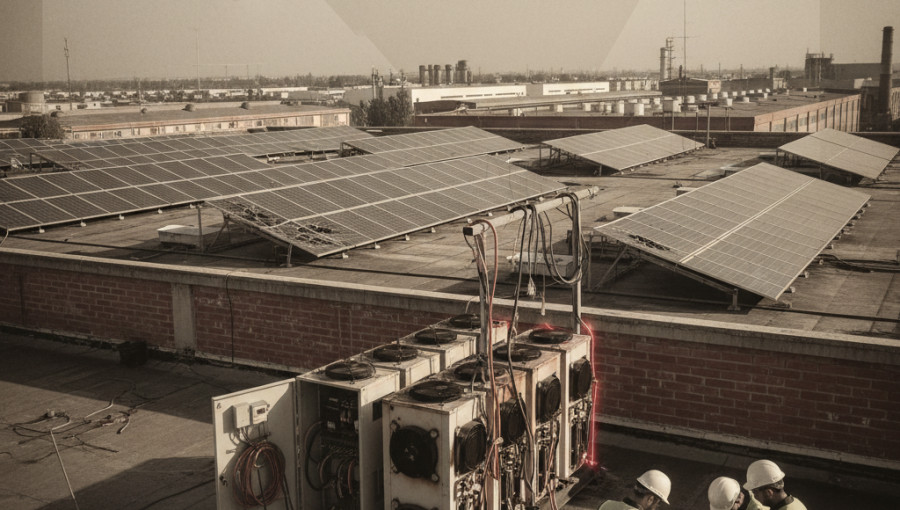
A recent investigation into Spain’s commercial and industrial solar sector has uncovered widespread technical and administrative failures following the rapid market expansion between 2019 and 2022. Audits of over 800 installations revealed that every single system inspected suffered from at least one significant deficiency. These issues range from improperly installed inverters and non-compliant solar modules to serious regulatory breaches. Consequently, more than 13% of businesses are seeing energy savings fall significantly short of initial projections, highlighting the risks of prioritizing speed and low costs over technical quality.
The rapid expansion of Spain’s commercial and industrial (C&I) solar market has left a legacy of technical and administrative problems across the country. Following a massive surge in demand over recent years, a wave of inexperienced companies entered the sector, often lacking the necessary expertise to execute complex projects. This has resulted in a significant number of installations plagued by construction defects and legal shortcomings.
According to Y Tú, a firm specializing in the audit and refurbishment of solar assets, the scale of the problem is extensive. After contacting more than 10,000 businesses, the company found that 13.2% of owners admitted their energy savings were far below expectations. More alarmingly, in a detailed review of 800 specific sites, 100% of the audited systems were found to have at least one major fault. These deficiencies generally fall into three categories: administrative hurdles, technical defects, and monitoring failures.
Administrative issues often involve incomplete permitting or a failure to fully legalize the installations, leaving businesses in a vulnerable legal position. Technical faults are even more varied, affecting both the direct current (DC) and alternating current (AC) sides of the systems. Auditors discovered problems with solar module strings, connectors, mounting structures, and cabling. On the AC side, common issues included poorly configured electrical panels, inadequate grounding, and inverters that were installed incorrectly.
In many cases, these defects do more than just lower energy production; they pose long-term electrical risks and can void manufacturer warranties. For example, some inverters were found installed without the minimum clearance distances required for ventilation, leading to overheating. Other installations utilized cabling without proper UV protection, causing the insulation to degrade in less than three years. There were even reports of “Type B” solar modules being used that lacked official CE marking or quality documentation.
The root cause of these failures is often attributed to a lack of regulatory knowledge and the pressure to reduce costs during the height of the solar boom. Many systems were built with undersized conductors and inadequate protection devices to save time and money. Experts warn that without regular maintenance, these issues will continue to surface, leading to premature equipment failure and potential damage to a facility’s broader electrical infrastructure. Moving forward, the industry faces a significant challenge in refurbishing these sub-par assets to meet the financial and technical standards originally promised to investors.