
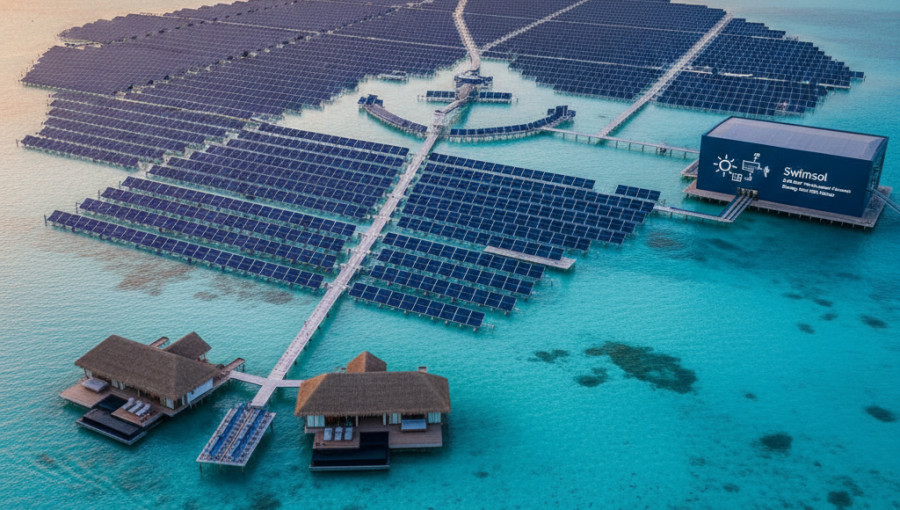
The Maldives has reached a significant renewable energy milestone with the commissioning of a 2.4 MW floating solar array at the Cheval Blanc Randheli resort. Developed by Austrian marine solar specialist Swimsol, this installation is currently the largest of its kind in the country. By providing sufficient power to run the entire property on solar energy during daylight hours, the project is expected to slash annual diesel expenses by approximately $1.5 million, offering a sustainable and cost-effective alternative to traditional fossil fuel dependence in remote island environments.
The Cheval Blanc Randheli SolarSea project represents the culmination of 15 years of engineering research, including 3D simulations and extensive real-world prototyping. To withstand the harsh marine environment, the engineering team utilized specialized aluminum alloys and stainless steel for the platform’s primary structure. The mooring system incorporates galvanized steel and sacrificial anodes to prevent corrosion, while the solar modules themselves are positioned more than 1.5 meters above the water line. This specific height is designed to protect the equipment from wave impact and minimize biofouling on the panels.
Anchoring the massive array required a specialized approach to protect the local ecosystem. Swimsol utilized custom-designed anchors tailored for sandy seabeds, which offer a significantly smaller environmental footprint than traditional concrete or gravity-based systems. Most of the mooring components are suspended mid-water, utilizing pre-tension buoys and bespoke damping elements to absorb shock loads and maintain stability. The hardware includes double-glass solar modules equipped with sealed junction boxes and high-grade connectors to ensure long-term reliability in high-salinity conditions.
The system’s integration into the resort’s power grid is managed by a sophisticated programmable logic controller (PLC). This setup allows battery inverters to synchronize with solar inverters and the existing diesel infrastructure. Operating in a virtual synchronous generator (VSG) mode, the system maintains grid stability by seamlessly transitioning between power sources. When solar production is high, the system reduces the load on diesel generators until they can be shut down completely. Excess energy is directed to battery storage, while output is automatically curtailed if the batteries reach full capacity and demand is met.
Financially, the transition to floating solar offers a compelling return on investment. Swimsol estimates that the break-even point for these systems typically occurs when diesel prices are between $0.65 and $0.85 per liter. Even with the added cost of battery storage in newer installations, the technology remains highly competitive against current Maldivian fuel prices. Martin Putschek, CEO of Swimsol, noted that the success of the 2.4 MW system proves the scalability of the technology, with similar projects already completed or underway across the Seychelles and other island territories.