Scientists Track Rare Earth Metals In Living Plants
Researchers at North Carolina State University have developed a groundbreaking, non-destructive method to track rare-earth metals within living plants. By utilizing fluorescence spectroscopy, the team can measure concentrations of elements like dysprosium in real-time without harming the vegetation. This innovation supports "phytomining," a sustainable alternative to traditional mining that uses plants to extract critical materials from contaminated soil. This technique allows scientists to determine the optimal harvest time, potentially securing a domestic supply of essential tech components while simultaneously cleaning up industrial pollution.
The global demand for rare-earth metals, the essential building blocks of modern electronics and green energy technologies, has sparked a search for more sustainable and localized extraction methods. While these materials are vital, they are rarely found in high enough concentrations to make conventional mining economically viable, especially in the United States. To address this, scientists are turning to phytomining, a process where specific plant species act as biological sponges, absorbing metals from the ground and storing them in their leaves.
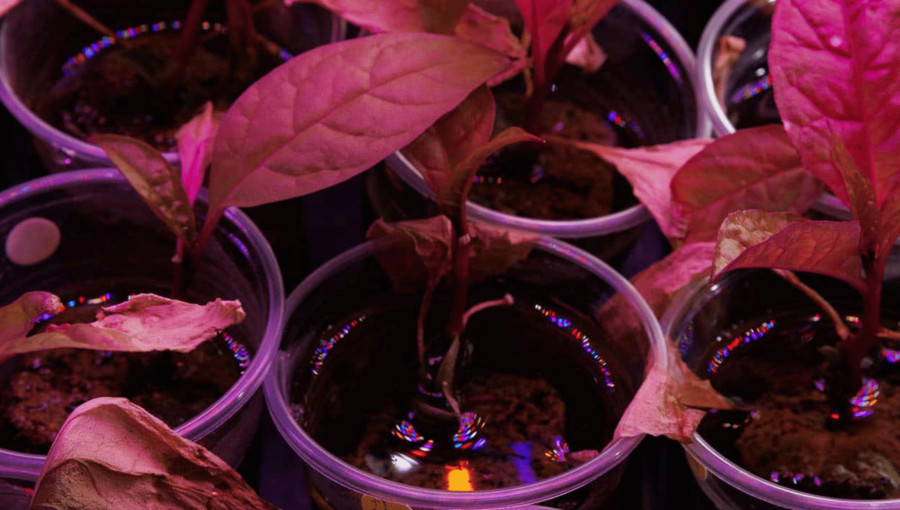
A significant hurdle in phytomining has been the inability to monitor metal accumulation without destroying the plant. Traditionally, researchers had to harvest and chemically analyze the tissue to check for metal content. However, a team led by Colleen Doherty, an associate professor at North Carolina State University, has pioneered a technique using fluorescence spectroscopy. By hitting the plants with a laser, researchers can trigger a glow from certain elements, allowing for rapid, non-invasive measurement.
The primary challenge of this light-based approach was distinguishing the light emitted by the rare-earth elements from the plant’s own natural autofluorescence. The team focused their efforts on dysprosium, a metal that retains its glow slightly longer than the plant's organic matter. To enhance this effect, they introduced sodium tungstate, a chemical that significantly brightens the metal's signal. This combination allows for precise concentration measurements in just seconds.
This non-destructive capability is a game-changer for the industry. It enables researchers to test the same plant repeatedly throughout its growth cycle, identifying the exact moment when metal concentrations are at their peak for harvesting. By deploying these plants in polluted areas, such as old mine sites or contaminated ponds, the process serves a dual purpose: extracting valuable resources and remediating toxic environments.
Doherty expressed optimism about the potential impact of this research on both the manufacturing sector and environmental health. As the U.S. seeks to reduce its reliance on foreign sources for critical minerals, this refined phytomining technique could become a cornerstone of a more resilient and eco-friendly rare-earth supply chain.