
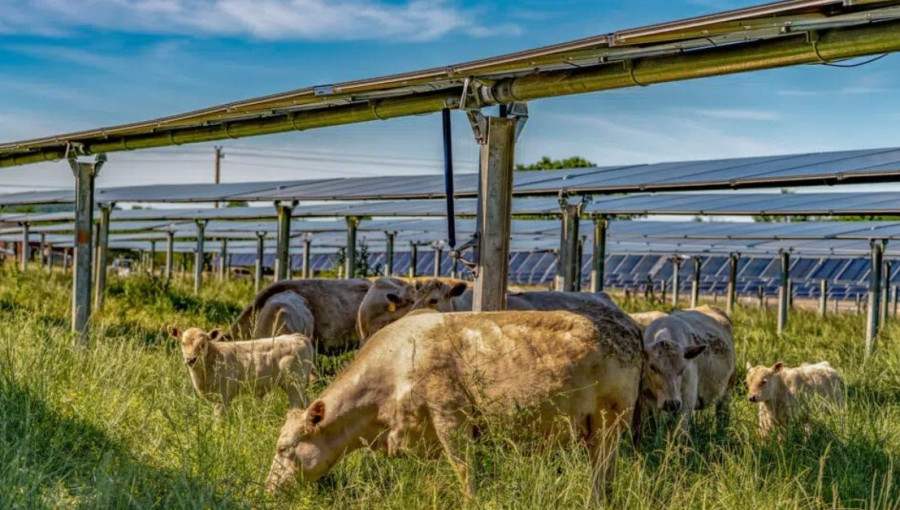
Silicon Ranch has launched the first commercial-scale agrivoltaic project that integrates beef cattle operations with utility-scale solar energy production. Located at the Christiana Solar Ranch in Tennessee, the facility utilizes the patented “CattleTracker” system, which features adjustable solar panels designed to accommodate the movement and behavior of large livestock. This innovative approach allows for dual land use, providing renewable energy to over 750,000 customers while maintaining active agricultural production and improving soil health through managed commercial grazing.
Nashville-based developer Silicon Ranch has officially deployed its “CattleTracker” technology at the Christiana Solar Ranch, marking a significant evolution in the renewable energy sector. While agrivoltaic systems—which combine solar generation with agriculture—have existed for years, they have largely been limited to small-scale research or sheep grazing. This project represents the first time a utility-scale solar farm has been designed specifically to coexist with full-scale beef cattle ranching in a commercially viable model.
The facility operates within the service territory of Middle Tennessee Electric (MTE), the second-largest electric cooperative in the United States. By purchasing power from the Christiana site, MTE provides cost savings to its extensive customer base across 11 counties. The project emphasizes domestic production, utilizing solar panels from First Solar and steel tracker components manufactured at a factory in Memphis.
The core of the innovation lies in the custom solar tracker system developed by CTO Nick de Vries. These trackers are engineered to shift into a “grazing mode,” which provides ample clearance and safety for the cattle to move beneath the solar modules. Unlike traditional solar installations that require fencing to exclude livestock, this design treats the solar farm as a functional pasture. The panels also provide essential shade, which helps moderate temperatures for the animals and the vegetation below.
Research conducted at the site since 2023 by Colorado State University and other agricultural experts suggests that the cattle maintain high welfare standards while grazing. Furthermore, the integrated approach supports soil health and carbon sequestration, aligning with the company’s broader regenerative energy goals. By demonstrating that solar infrastructure can support rather than displace traditional farming, Silicon Ranch aims to reduce the social and political friction often associated with siting large-scale energy projects in rural agricultural regions.
This model is intended to be repeatable across the company’s portfolio. Because the system delivers electricity at wholesale prices, the agricultural benefits do not come at an extra cost to ratepayers. As the industry looks for ways to maximize land efficiency, the Christiana project serves as a proof of concept that energy production and livestock management can function as a single, integrated ecosystem.