UK Floating Solar Could Provide 40GW Of Power

A new report indicates that floating solar technology could contribute more than 40 GW of clean energy to the United Kingdom's power grid by 2050. Commissioned by Bluefield and analyzed by CBI Economics, the study highlights floating solar as a vital, untapped resource capable of bolstering energy security and meeting the surging electricity demand driven by AI infrastructure and nationwide electrification. By utilizing reservoirs near urban centers, this technology offers a scalable and rapid solution to reduce the nation's reliance on volatile global gas markets while supporting domestic industrial growth and supply chains.
The analysis identifies floating solar as a cornerstone for the UK’s transition to a resilient power system. As electricity demand is projected to rise sharply due to industrial investment and the expansion of data centers, floating solar offers a unique advantage: it can be deployed quickly and situated close to high-demand areas. Because many reservoirs are located near major population centers and planned AI growth zones, energy providers can co-locate generation with power-intensive infrastructure, significantly reducing the pressure on the national grid.
According to the report, a supportive policy environment could see floating solar scale rapidly over the next two decades. By 2040, the technology has the potential to generate power equivalent to approximately 11 gas-fired power stations. This shift would drastically decrease the UK's exposure to international fossil fuel price spikes, providing a more stable and affordable domestic energy supply.
Michael Shanks, the Minister for Energy in the Department for Energy Security and Net Zero, emphasized the urgency of utilizing these water surfaces. He noted that the conflict-driven instability of global gas markets makes the transition to domestic renewable sources a matter of national security. By harnessing the potential of the nation's reservoirs, the UK can protect consumer bills and accelerate its path toward a clean power system.
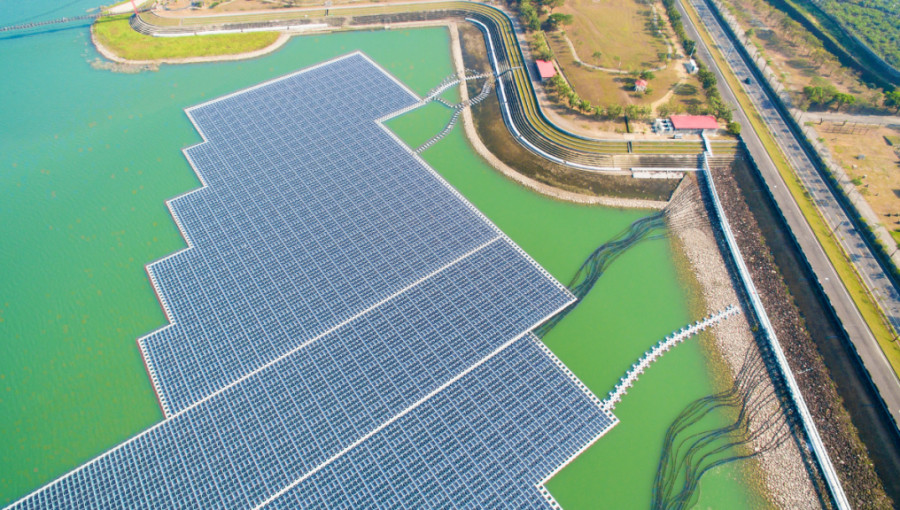
Bluefield is already demonstrating the feasibility of this technology through its operation of the UK’s largest floating solar installation at the Queen Elizabeth II Reservoir. This project supplies clean electricity directly to a neighboring water treatment facility. The company is currently expanding its development pipeline to include several utility-scale projects across the country. Beyond power generation, floating solar provides environmental advantages, such as reducing water evaporation and limiting algae growth in reservoirs.
The growth of the floating solar sector also presents a significant opportunity for the UK’s manufacturing base. Tata Steel UK, a contributor to the report, highlighted that the demand for coated and galvanized steel for floating solar structures mirrors that of ground-mounted systems. A consistent project pipeline would allow domestic manufacturers to invest in new products specifically for the renewable sector, strengthening local supply chains and supporting high-skilled jobs.
Industry leaders argue that while the engineering capability and investment appetite exist, a clear policy framework is essential to unlock the sector's full potential. With the right market signals, floating solar could become a primary driver of the UK’s energy independence, delivering clean power exactly where and when the modern economy requires it.