
A study by Fraunhofer ISE and its partners indicates that integrating solar technology into vehicles could significantly alleviate pressure on Europe’s power grid. By analyzing 1.3 million kilometers of driving data across 23 vehicle types, researchers determined that passenger cars could cover between 55% and 80% of their annual energy needs through vehicle-integrated photovoltaics (VIPV). If implemented across new vehicle registrations through 2030, this technology could reduce annual grid electricity demand by 15.6 TWh. The findings suggest that VIPV is a vital innovation for sustainable mobility, offering a structural solution to the rising energy requirements of electric vehicles.
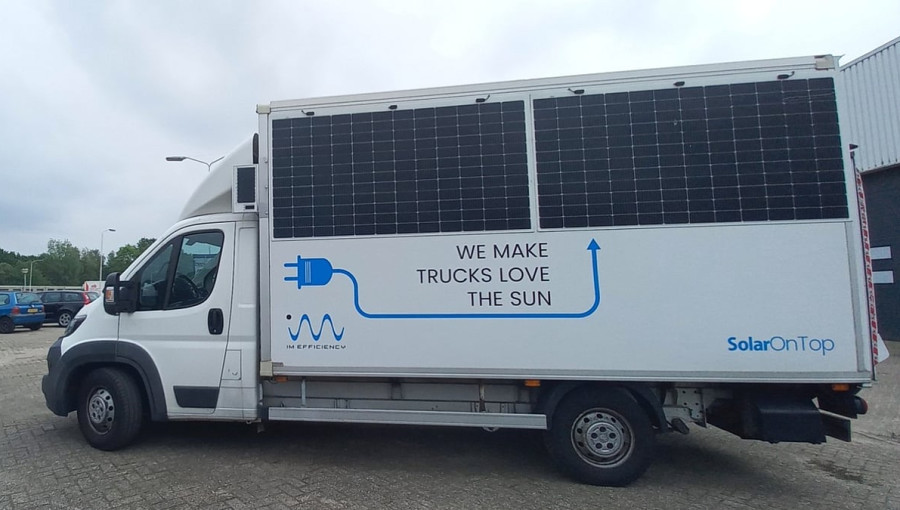
The SolarMoves project, which included collaboration from TNO, Sono Motors, Lightyear, and IM Efficiency, utilized satellite and meteorological data to assess the solar potential of various transport modes. While passenger vehicles showed strong results, the logistics sector emerged as a particularly high-potential area. Electric trucks, which possess larger surface areas for solar modules, could see their daily driving range extended by up to 15%. Furthermore, solar-equipped trailers could generate enough electricity to power essential auxiliary equipment, such as refrigeration units, by producing up to 110 kWh daily when both roof and sidewall modules are utilized.
Fraunhofer ISE equates the potential 15.6 TWh reduction in grid demand to the annual output of roughly 2,200 onshore 3 MW wind turbines. Project manager Lenneke Slooff-Hoek emphasized that electrification must be paired with innovations that structurally lower energy consumption. To support this transition, the research consortium is advocating for the inclusion of VIPV in the Worldwide Harmonized Light Vehicle Test Procedure. They are also calling for a unified European framework that formally recognizes the CO2 reductions and energy savings provided by solar-integrated vehicles within the Renewable Energy Directive.