
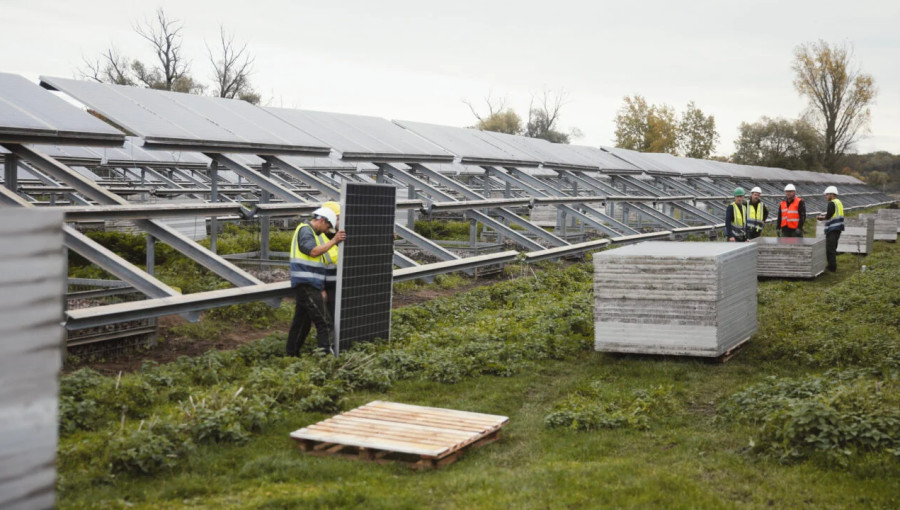
The global solar industry faces a significant challenge as millions of tons of decommissioned photovoltaic modules are expected to reach the end of their lifespans in the coming decades. Sonia Dunlop, CEO of the Global Solar Council, warns that the sector must address recycling immediately by implementing financial mechanisms at the point of purchase. While the European Union has established a leading regulatory framework, the rest of the world lacks the necessary infrastructure to manage the projected waste. Achieving a circular economy for solar technology requires urgent government mandates, international cooperation, and dedicated recycling policies to ensure sustainability.
The core of the issue lies in the long lifespan of solar panels, which can remain operational for over 30 years. Because these modules are often treated as standard electronic waste, current systems fail to account for their unique characteristics. Dunlop advocates for an “advanced recycling fee” model, where the cost of future disposal is embedded into the initial purchase price. This approach protects consumers from future price hikes and ensures that funds are available for recycling long after the original manufacturing companies may have ceased operations.
While private sector initiatives are emerging, with companies like Canadian Solar and Qcells partnering with specialized recyclers, voluntary efforts are insufficient. A truly circular industry requires standardized, government-mandated frameworks. Currently, the recycling sector is struggling to keep pace with the rapid growth of solar installations. Without a global, well-financed system, the industry risks missing the opportunity to recover valuable materials that could theoretically reduce the need for new mining by 2040.
Regulatory progress is uneven, though regions like Australia, China, Japan, and parts of the United States are beginning to develop policies. The Global Solar Council is working to bridge these gaps by encouraging due diligence among buyers and developers. By integrating recycling considerations into procurement and investment guidelines, the industry hopes to formalize a path toward sustainability. Ultimately, the transition to a circular lifecycle for photovoltaic equipment depends on the ability of governments and private stakeholders to coordinate effectively before the anticipated wave of decommissioned panels arrives.