Battery Storage Stabilizes AI Data Center Power Swings
As artificial intelligence training demands surge, battery energy storage systems (BESS) have emerged as the primary solution for managing the resulting power fluctuations at data centers. Traditional power generation and older uninterruptible power systems are increasingly unable to keep pace with the rapid load swings caused by high-density AI clusters. By integrating advanced software and battery technology, operators can protect grid stability and ensure the critical 99.999% uptime required for modern computation. This shift allows data centers to handle massive energy transitions in milliseconds, preventing costly outages and facilitating faster integration into the existing electrical infrastructure.
The rise of AI training clusters has fundamentally altered the energy profile of data centers, turning once-predictable loads into a significant "ramp rate" challenge for grid operators. According to Hugh Scott, chief technology officer at system integrator FlexGen, power demands in these facilities can swing between 50% and 100% of the nameplate load several times per second. This level of volatility is often outside the operating envelope of onsite generation assets like turbines, which risk mechanical damage if forced to respond to such rapid fluctuations.
The financial stakes for maintaining stability are immense. Even a momentary power disturbance lasting only 20 milliseconds can disrupt operations, and analysts estimate that outages at AI-focused facilities can result in revenue losses of up to $1 million per megawatt each day. As a result, the industry is moving away from traditional rack-level lead-acid batteries, which were not designed for the power densities now reaching 120kW per rack and projected to hit 600kW in the near future.
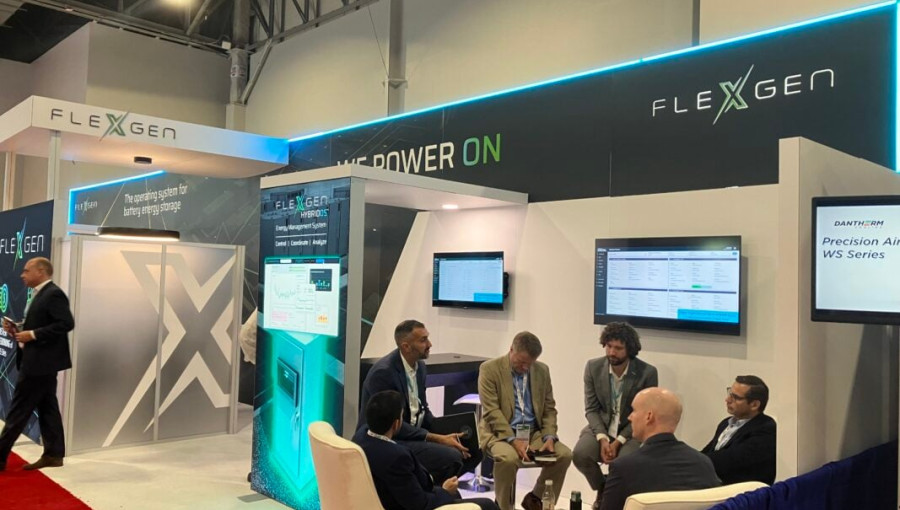
To address these challenges, FlexGen has partnered with electrical contractor Rosendin to deploy campus-level BESS solutions. These systems utilize specialized software, such as the HybridOS energy management system, to coordinate batteries and generators at millisecond timescales. Key to this approach are patented technologies like "break-before-make" automatic transfer switches and frequency stabilization circuits. These tools allow the battery to absorb fast transients, protecting both the local generators and the wider utility grid from sudden spikes or drops in demand.
The shift toward large-scale battery integration is already being reflected in major industry deals. Tech giants such as OpenAI and Oracle recently announced a 1GW+ campus in Michigan that will utilize a diverse energy mix, including significant battery storage provided by the utility DTE. Similarly, Google’s parent company, Alphabet, recently moved to acquire data center and energy developer Intersect Power in a multi-billion dollar deal, highlighting the growing intersection between digital infrastructure and energy storage.
Beyond immediate power stabilization, batteries offer four strategic advantages for data center developers. First, they enable faster grid interconnection by reducing the firm capacity a utility must reserve for a project. Second, they lower operational costs through peak shaving and energy arbitrage. Third, they enhance resilience by allowing facilities to ride through grid faults or operate entirely off-grid when paired with other resources. Finally, they manage power quality by absorbing the ultra-fast ramps inherent to AI workloads that would otherwise stress local grid components.
As the industry evolves, the ability to provide flexibility through intelligent controls and fast-responding storage is becoming just as vital as the raw megawatt capacity of the facility. While nuclear and gas remain part of the long-term energy conversation, batteries paired with renewable energy are proving to be the most rapid and cost-effective method for stabilizing the next generation of AI-driven infrastructure.