Dutch Grid Fee Plan Sparks Renewable Energy Backlash
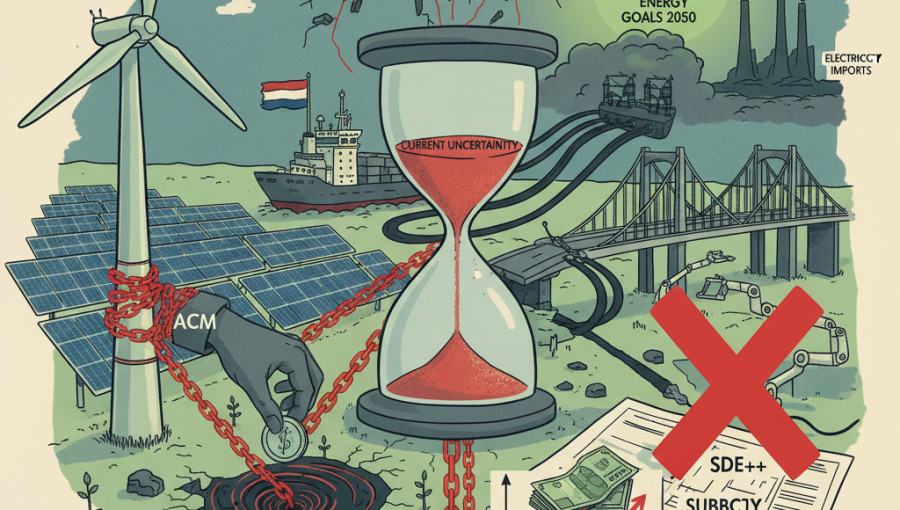
The Netherlands Authority for Consumers and Markets (ACM) has announced plans to introduce a feed-in tariff for large-scale electricity producers by 2032, requiring wind and solar farms to share grid maintenance costs. While the ACM aims to align with German standards and provide market adjustment time, the proposal has drawn sharp criticism from industry bodies like Holland Solar and Energie-Nederland. Trade groups warn that the resulting financial uncertainty is already stalling renewable energy investments, potentially increasing electricity imports and consumer costs while jeopardizing the nation’s energy transition targets.
The ACM’s decision to implement the feed-in tariff (FIT) scheme marks a significant shift in how Dutch grid costs are allocated. Under the new framework, which is scheduled to take effect no later than January 1, 2032, large-scale producers supplying electricity to the national grid will be required to contribute to infrastructure expenses. The regulator contends that the long lead time provides sufficient opportunity for the market to adapt to the new financial requirements. According to Holland Solar, the Dutch framework is being designed in connection with Germany’s upcoming system to ensure a level playing field across the regional energy market.
However, the renewable energy sector has expressed deep concern over the move. Industry representatives argue that the lack of immediate clarity regarding tariff levels is already creating a climate of investment hesitation. Holland Solar noted that this uncertainty could delay critical solar module installations and wind projects, ultimately forcing the Netherlands to rely more heavily on imported electricity. Such a shift, the group warns, would likely result in higher utility bills for end consumers and hinder the country's carbon reduction goals.
Energie-Nederland, the trade association representing the broader electricity sector, has been particularly vocal in its opposition. The group argues that the ACM has failed to provide empirical evidence that the tariff will actually improve grid efficiency. Instead, they suggest the measure will undermine the business cases for onshore and offshore wind, as well as low-carbon flexible power projects. Developers and financiers will now have to factor in these future grid costs, which could lead to higher subsidy requirements for the SDE++ program and impact the competitiveness of offshore wind tenders.
The timing of the proposal is also a point of contention. The industry highlights that current geopolitical tensions necessitate an acceleration of sustainable energy deployment rather than the introduction of new financial hurdles. Energie-Nederland has urged the government to abandon the FIT proposal in favor of structural improvements to grid management and the expansion of existing infrastructure.
This regulatory development comes as the Netherlands prepares for other significant policy shifts. Starting in July 2027, the government plans to phase out the SDE++ subsidy for new solar and wind energy projects, transitioning instead to a two-way contracts for difference (CfD) model. This move is intended to provide price stability and prevent market overstimulation, but the addition of a feed-in tariff by 2032 adds another layer of complexity for developers navigating the evolving Dutch energy landscape.