
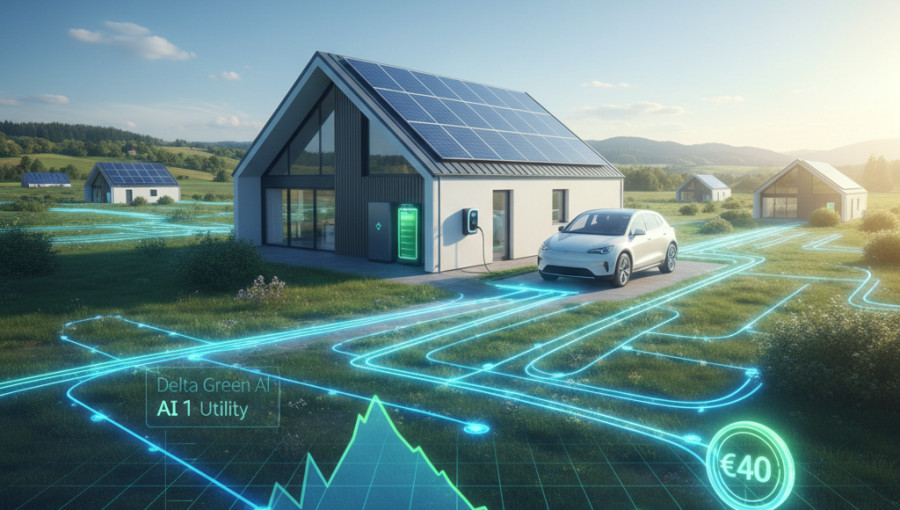
European households equipped with battery storage and electric vehicles are transforming from passive consumers into active market participants, earning significant revenue during periods of negative electricity prices. As renewable energy generation surges, wholesale prices occasionally drop below zero, creating opportunities for intelligent energy management systems to charge batteries when the grid pays them to consume power. Companies like Delta Green are aggregating these distributed assets into virtual power plants, helping utilities stabilize the grid while providing homeowners with monthly earnings that can exceed €40 in mature markets like Germany.
During recent holiday periods in Europe, a combination of high renewable output and low industrial demand sent day-ahead electricity prices into negative territory. In the Germany-Luxembourg bidding zone, prices plummeted as low as minus €0.50 per kilowatt-hour. This phenomenon, which typically represents a financial loss for utilities tied to fixed-price contracts, has become a lucrative window for households using smart battery management. Jan Hicl, chief product officer at Delta Green, noted that some managed systems earned between €30 and €40 in a single day by absorbing excess power from the grid.
The business model relies on aggregating residential assets, such as home batteries and electric vehicle chargers, into a coordinated virtual power plant. By forecasting wholesale prices over a 72-hour horizon, the system can pause charging from a solar panel system to ensure batteries are empty before a negative price window begins. When prices drop below zero, the system triggers charging directly from the grid. This strategy shifts the traditional focus from maximizing self-consumption to maximizing grid consumption at the exact moment the market rewards it.
Data suggests that a typical German household with a PV system and storage can generate approximately €40 per month through a combination of day-ahead optimization and imbalance management. While Germany has a highly developed market with various buffers to absorb fluctuations, less mature markets like Austria and Poland offer even higher potential revenues—estimated at €71 and €45 per month, respectively—due to more volatile price reactions when renewable generation surges.
Delta Green operates as a “flexibility-as-a-service” provider, partnering with major utilities such as E.ON to integrate these solutions into existing customer portfolios. Despite the automated nature of the system, homeowners retain full control over their equipment. Users can set minimum state-of-charge limits or reserve capacity for backup power to ensure their daily needs are met. This collaborative approach allows utilities to mitigate balancing risks while offering customers a transparent way to benefit from the evolving energy landscape.
The shift toward market-oriented small-scale PV systems is gaining political momentum in Germany, with discussions regarding the removal of feed-in tariffs during negative price periods. While such regulatory changes could accelerate adoption, the current model already functions effectively within fixed-price contract structures. By turning domestic flexibility into a managed asset, the energy sector is finding new ways to handle the inherent variability of wind and solar power without relying solely on industrial-scale infrastructure.