First Aptera Solar EV Rolls Off Assembly Line
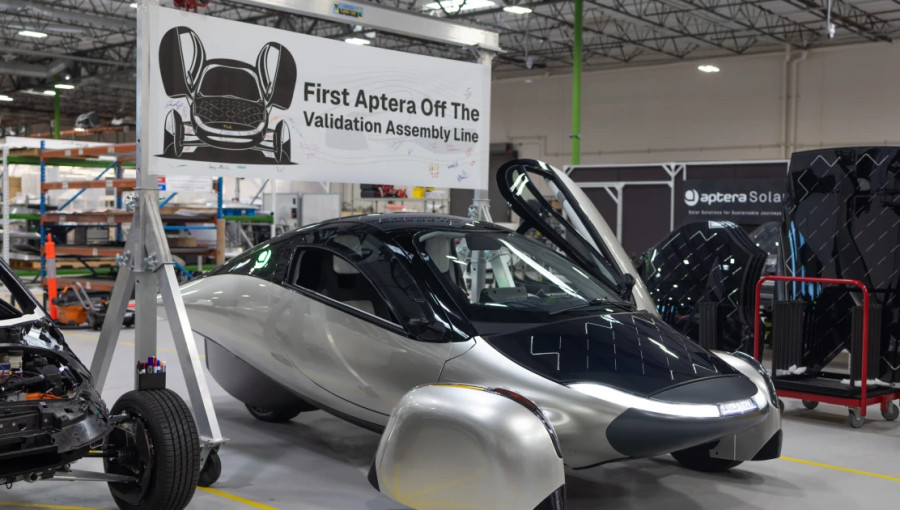
Aptera Motors has achieved a major production milestone as the first vehicle rolled off its low-volume validation assembly line in San Diego. This transition from hand-built prototypes to a structured 14-station assembly process marks a significant step toward regulatory certification and mass production. While these initial vehicles are designated for rigorous testing programs rather than immediate delivery, the development signals a move toward commercializing the company’s three-wheeled solar-powered EV, which has already secured nearly 50,000 reservations and $135 million in crowdfunding.
The journey for Aptera’s futuristic solar-powered EV (sEV) has reached a critical turning point. After nearly 20 years of development, design updates, and financial restructuring, the company is now moving beyond the prototype phase. The newly operational validation line utilizes a team of specialized technicians to ensure repeatable builds, providing the consistency necessary for safety testing and EPA certification. These first units will undergo exhaustive evaluations, including thermal validation, brake performance testing, and destructive crash simulations to meet regulatory standards.
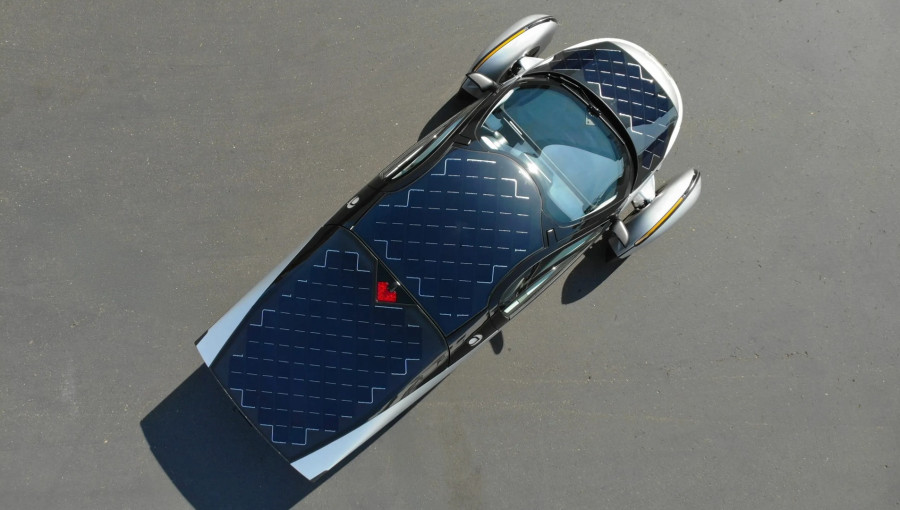
The Aptera sEV features a distinct teardrop shape designed for maximum aerodynamic efficiency. Its structure is composed of a lightweight yet durable sandwich-core construction using carbon fiber, Kevlar, and flax composites. This advanced engineering allows the vehicle to achieve a range of approximately 643 kilometers on a single battery charge. Furthermore, strategically integrated solar panels on the hood, dashboard, roof, and hatch can provide up to 64 kilometers of daily range purely from sunlight, potentially allowing drivers in sunny regions to cover over 16,000 kilometers annually without plugging in.
Co-CEO Steve Fambro emphasized that the completion of the first vehicle from the validation line is a foundational achievement for the company. These vehicles are the primary tools for optimization required to transition to sellable consumer models. The milestone follows successful real-world testing, including a 482-kilometer road trip along Route 66 from Arizona to California, which served to validate the vehicle's systems under diverse environmental conditions.
With nearly $1.7 billion in potential revenue from existing reservations, Aptera is positioning its three-wheeler as a self-sufficient alternative to traditional electric vehicles. Unlike heavier EVs that rely exclusively on the power grid, the sEV’s ability to generate its own energy through solar panels addresses infrastructure challenges. The company continues to build out its series of validation vehicles as it moves toward the final stages of regulatory approval and the commencement of initial customer deliveries.