
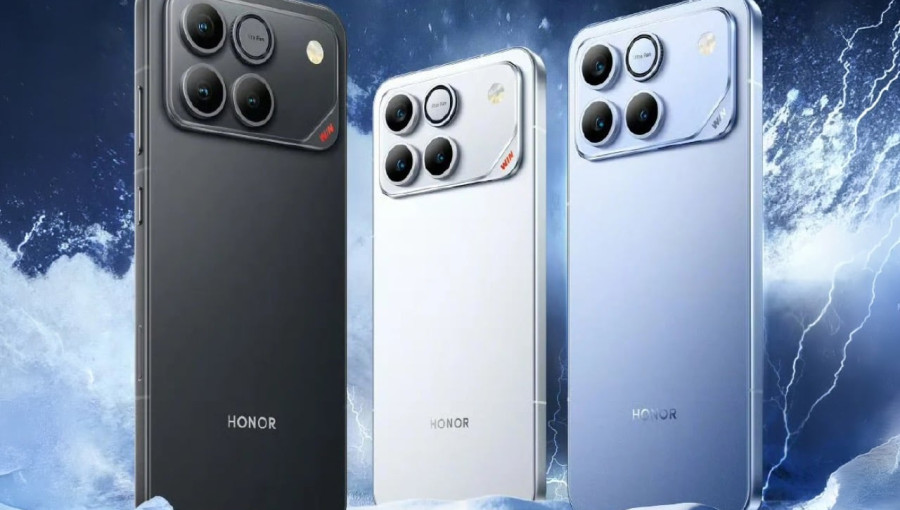
Honor is set to redefine smartphone endurance with the development of a 12,000mAh battery device, leveraging cutting-edge silicon-carbon chemistry to maintain a slim profile. Unlike previous attempts at massive batteries that resulted in bulky, impractical designs, Honor’s new approach focuses on high energy density. This project is part of a broader strategy to launch seven devices with capacities exceeding 10,000mAh, positioning the brand as a dominant force in the long-lasting smartphone market while addressing thermal and charging challenges through innovative dual-cell architectures.
The era of choosing between a slim smartphone and multi-day battery life may be coming to an end. Recent leaks from Weibo indicate that Honor is currently testing a flagship-level device featuring a 12,000mAh battery. This development represents a significant leap from the 2019 Energizer P18K Pop, which required a cumbersome 1.8-centimeter thickness to house its 18,000mAh cell. Instead of relying on traditional lithium-ion limitations, Honor is utilizing silicon-carbon battery technology to achieve high capacity without the excessive bulk.
The foundation for this breakthrough was showcased at MWC 2026 with the Honor Magic V6. That foldable device utilized battery layers only 0.015 centimeters thick with a 32% silicon content, allowing for a 6,660mAh capacity in a remarkably thin chassis. Honor is now scaling this materials platform to reach the 12,000mAh milestone. This move is part of an aggressive portfolio expansion, with rumors suggesting that the company has seven different devices in development with batteries larger than 10,000mAh, likely spanning the Honor X80, Honor Power 3, and a new WIN 2 series.
While competitors such as Oppo, Xiaomi, and Huawei are also exploring large-capacity batteries, they appear to be taking a more conservative approach by testing single models. Honor’s strategy is more comprehensive, aiming to establish the brand as the industry standard for battery performance. Currently, Honor already accounts for three of the four smartphones on the market with 10,000mAh-class batteries, with the Vivo Y600 Pro being the only notable external competitor at 10,200mAh.
The shift toward such massive capacities introduces significant engineering hurdles, particularly regarding thermal management and fast charging. Standard 65W or 120W charging speeds can generate excessive heat in large single-cell configurations. To combat this, Honor is reportedly testing a dual-cell architecture. By splitting the 10,000mAh or 12,000mAh load across two separate cells, the device can manage heat more effectively and maintain high charging efficiency. This focus on sophisticated thermal math suggests that Honor is prioritizing a practical user experience over simply chasing impressive specifications.