Huawei Headlights Transform Electric Vehicles Into Mobile Cinemas
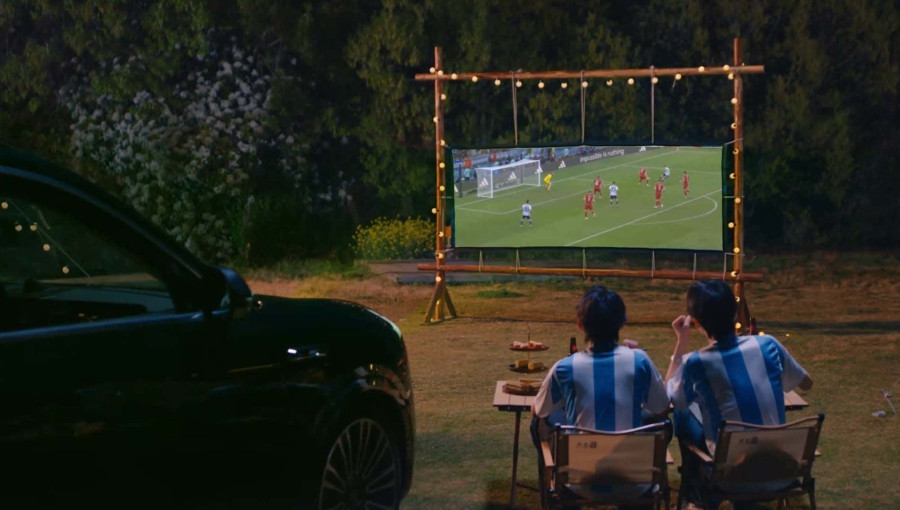
Chinese electric vehicle manufacturers are pushing the boundaries of automotive lighting with new headlight technology capable of projecting full-color movies. At the recent Beijing Auto Show, Huawei unveiled the latest iteration of its XPixel system, which transforms vehicles into mobile cinema projectors. While the United States only recently updated regulations to permit basic adaptive headlights, Chinese automakers are already integrating these advanced systems into production models like the Aito M9. Beyond entertainment, the technology enhances safety by projecting navigation paths and pedestrian signals directly onto the road surface.
Huawei showcased the newest version of its XPixel lighting technology at the Huawei Qiankun Technology Conference during the Beijing Auto Show. This advanced system allows headlights to function as high-resolution, full-color projectors, enabling drivers to park their vehicles and project movies or television shows onto any flat surface. This innovation effectively turns the car into a portable drive-in theater, offering a level of versatility that far exceeds traditional lighting functions.
The underlying XPixel technology has been in development for approximately three years and is already featured in models such as the Huawei Stelato S9. However, the latest version introduces full-color capabilities, which will make its debut in the Aito M9. Huawei plans to expand the rollout of this technology to several upcoming vehicles, including the Luxeed V9 multi-purpose vehicle and the Qijing GT7 shooting brake.
Beyond entertainment, the XPixel system is deeply integrated with the vehicle’s driver assistance features. The headlights can project dynamic lane-change guides on the asphalt to assist drivers or display interactive signals for pedestrians to indicate when it is safe to cross. It even includes interactive features for families, such as the ability to project games like hopscotch for children.
This technological leap highlights a growing gap between Chinese automotive innovation and the North American market. In the United States, the Federal Motor Vehicle Safety Standards historically restricted the use of advanced lighting. Although regulations were updated in 2022 to allow for adaptive driving beams—which adjust light patterns to prevent blinding other motorists—the U.S. market remains significantly behind the sophisticated systems now becoming standard in China. These developments underscore how Chinese manufacturers are utilizing cutting-edge technology to differentiate their electric vehicles in a highly competitive global market.