Innovative Algorithm Enhances Solar Energy and Crop Yields
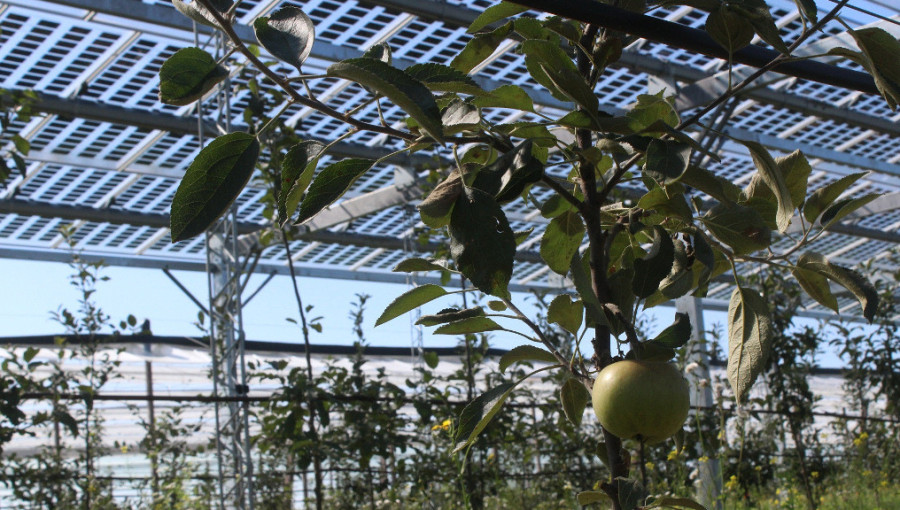
Researchers at the Fraunhofer Institute for Solar Energy Systems have created a groundbreaking algorithm designed to enhance crop yields while maximizing the efficiency of solar energy production in agricultural settings. This innovative approach is currently being implemented at a fruit farm in southern Germany, where solar panels are utilized alongside the cultivation of apples and pears. The system employs solar tracking technology to optimize the positioning of the panels, ensuring that the crops receive an optimal amount of sunlight essential for their growth.
The Vollmer fruit farm showcases a dual-use agri-photovoltaic system, with a 1.5-hectare site featuring 880 kilowatts of solar capacity. Maddalena Bruno, the project manager at Fraunhofer ISE, emphasizes the delicate balance of light for apple tree health, pointing out that insufficient light hinders growth while excessive exposure can cause damage. Climate change exacerbates the challenge of managing light availability, making the developed algorithm crucial for agricultural productivity.
The algorithm adapts the solar tracking based on microclimatic conditions and weather forecasts. Unlike previous strategies that applied fixed shading, this method utilizes specific targets for photosynthetically active radiation (PAR) tailored to the developmental stages of the trees. Daily adjustments are made based on real-time weather data and the algorithm’s intelligent predictions optimize the sunlight exposure for healthy growth, which differs significantly between varying weather conditions.
During the recent Agrivoltaics World Conference in Freiburg, the researchers demonstrated that their system could efficiently respond to different weather scenarios while minimizing computational demands. By continuously analyzing data from sensors on the farm, the algorithm fine-tunes the solar panels' alignment, thus maintaining an ideal environment for the apples while still generating energy.
Initial trials indicate promising results, with the optimized tracking achieving roughly 90% of the ideal light conditions for the apple trees, facing only a 20% reduction in electricity output. In contrast, the traditional tracking method led to only 50% of the necessary light for the crops. This underscores the importance of personalized control methods in effectively balancing agricultural output with energy generation.
Moving forward, the project will also refine the algorithm to adjust solar tracking in accordance with the electricity spot market, ensuring compliance with regulatory standards, especially during periods of grid overload. As the energy landscape evolves, these advancements represent a significant step towards sustainable agriculture integrated with renewable energy systems.