
The global market for solar PV modules continues to experience historically low prices, a situation driven by persistent oversupply. This downward pressure is being intensified as Chinese manufacturers preemptively ship stock overseas to avoid a potential tax increase. According to European trading platform pvXchange, this volatile, low-price environment has unfortunately created fertile ground for sophisticated fraud schemes targeting various players in the solar industry, from end-customers to wholesalers.
A significant imbalance between supply and demand is keeping solar module prices at rock-bottom levels in both wholesale and contract markets. Analysis from pvXchange indicates that prices for all major module technologies are moving sideways, lacking any definitive long-term direction amid the current market glut. This surplus is being exacerbated by a proposed tax adjustment in China, slated for December 2025, which could raise module prices by approximately 9%. In anticipation, many Chinese producers are rushing to move their inventory into overseas storage, further depressing global prices.
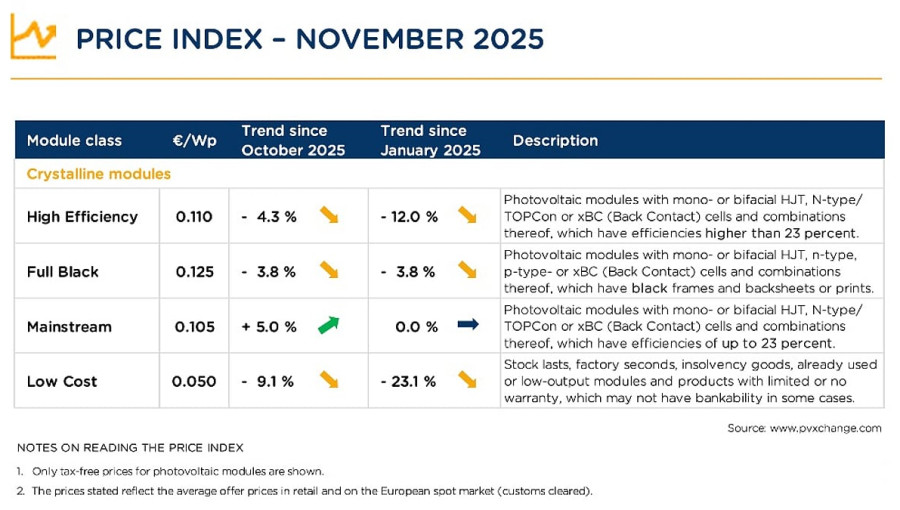
As of mid-November 2025, pvXchange reported that high-efficiency modules with over 23% efficiency were priced at €0.110 per watt, a 4.3% drop from the previous month and a 12% decline since the start of the year. Similarly, full-black modules were trading at €0.125 per watt, marking a 3.8% monthly decrease. In contrast, mainstream modules with up to 23% efficiency saw a 5% price increase since October to €0.105 per watt, though this figure remains unchanged from January 2025. The most significant drop was in the low-cost category—which includes old stock and products with limited warranties—falling 9.1% since October to just €0.050 per watt.
Martin Schachinger, the founder and Managing Director of pvXchange, warns that this combination of high market activity and extremely low prices is creating a perfect storm for fraudulent behavior. Scammers are capitalizing on the heightened public interest in photovoltaics, offering seemingly incredible deals and returns to lure in unsuspecting customers and investors. Schachinger notes that because system prices are now so low that bank financing is often unnecessary, it has become easier for consumers to fall for deceptive suppliers who ultimately prove to be fraudulent.
These scams are increasingly sophisticated. Fraudsters create convincing, professional-looking websites to attract customers, collect advance payments, and then either fail to deliver the solar panels or abandon installations midway. Wholesalers are also being targeted; fraudulent companies place large orders for components from multiple suppliers, only to file for bankruptcy and disappear after receiving the goods. Schachinger also highlighted another scheme where fake law firms, posing as insolvency administrators, deceive installers and dealers into purchasing non-existent components from supposedly bankrupt companies, and he urges all industry stakeholders to exercise extreme caution.