Mass Timber Skyscrapers Redefine Sustainable City Skylines
Modern architecture is shifting back to organic roots as "mass timber" emerges as a sustainable alternative to steel and concrete for high-rise construction. By utilizing engineered materials like cross-laminated timber, architects are designing skyscrapers that act as carbon sinks, permanently storing CO2 emission within their structures. Projects like the 86.5-meter Ascent MKE Building and Vancouver’s seismic-resistant Hive demonstrate that wood can match the strength and flexibility of traditional materials while offering significant environmental benefits and improved forest management through the strategic harvesting of smaller trees.
For over a century, the urban landscape has been defined by steel and concrete, materials chosen for their ability to flex under pressure from wind and seismic activity. However, the production of these materials is a major source of global CO2 emission. In response, a new generation of architects is turning to mass timber—engineered wood products made by gluing layers of timber together to create exceptionally strong, lightweight beams. These materials allow for the construction of buildings reaching 20 stories or more, offering a renewable alternative to industrial metals.
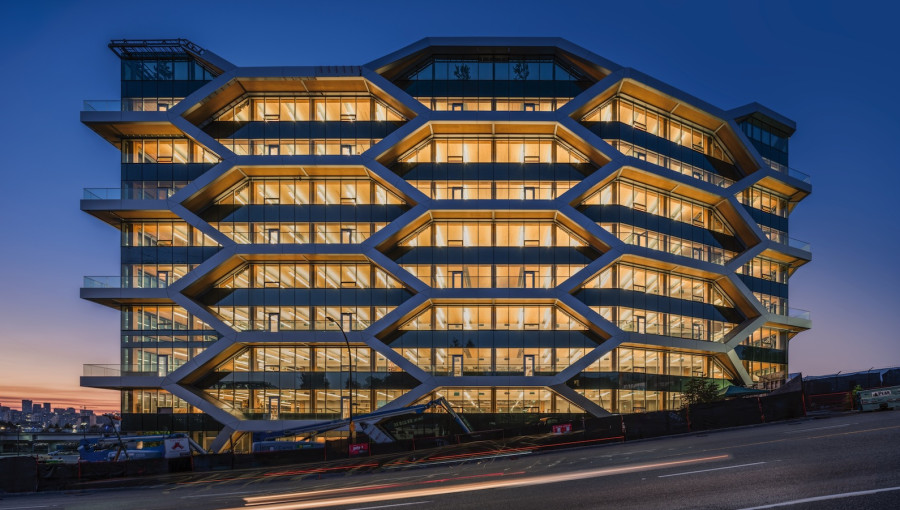
In 2022, the Ascent MKE Building in Milwaukee, Wisconsin, set a global benchmark at 86.5 meters tall, currently holding the title of the world’s tallest timber building. More recently, crews in Vancouver completed the Hive, a 10-story structure that serves as North America’s tallest brace-framed timber building designed specifically to resist seismic forces. These developments highlight a return to traditional building materials, updated with modern engineering to meet the demands of a warming planet.
Beyond its structural capabilities, mass timber offers a unique solution for forest health. Unlike traditional lumber that requires old-growth trees, engineered timber can be manufactured from smaller or medium-sized trees. This allows forestry agencies to thin overcrowded forests, a practice that reduces the risk of catastrophic wildfires while promoting biodiversity. Furthermore, while mining iron for steel scars the earth, timber comes from ecosystems that can be replanted and managed to continuously sequester carbon.
Safety remains a primary focus in timber high-rise design. To address earthquake risks, engineers are implementing advanced technologies such as Tectonus dampers—large shock absorbers that dissipate energy—and "rocking walls" anchored with high-strength steel rods. Testing at the University of California, San Diego, recently proved that a 10-story timber structure could survive nearly 90 simulated earthquakes without damage. Fire safety is similarly addressed through the natural properties of mass timber; when exposed to flame, the material forms a protective char layer that insulates the core of the beam, maintaining its structural integrity.
While these buildings still rely on concrete foundations and metal brackets, the shift toward wood significantly reduces the overall carbon footprint of the construction industry. Beyond the technical and environmental advantages, architects note that wood provides a tactile, biophilic quality that improves the well-being of occupants. As the industry evolves, the integration of ancient materials and modern human ingenuity is set to redefine the skylines of the future.