Noria Energy Launches Innovative Floating Solar Project in Colorado

Noria Energy has recently announced the development of its 50-kilowatt Aurea Solar array on a water supply reservoir in Golden, Colorado, marking a significant milestone in the emerging floating solar industry. The project aims to implement Noria's proprietary AquaPhi solar tracking system, which enhances energy output by allowing solar panels to follow the sun's path on the water’s surface. While floating solar installations have yet to achieve widespread acceptance in the U.S., efforts like Noria’s could catalyze broader adoption, particularly as utilities seek to conserve water and promote clean energy solutions.
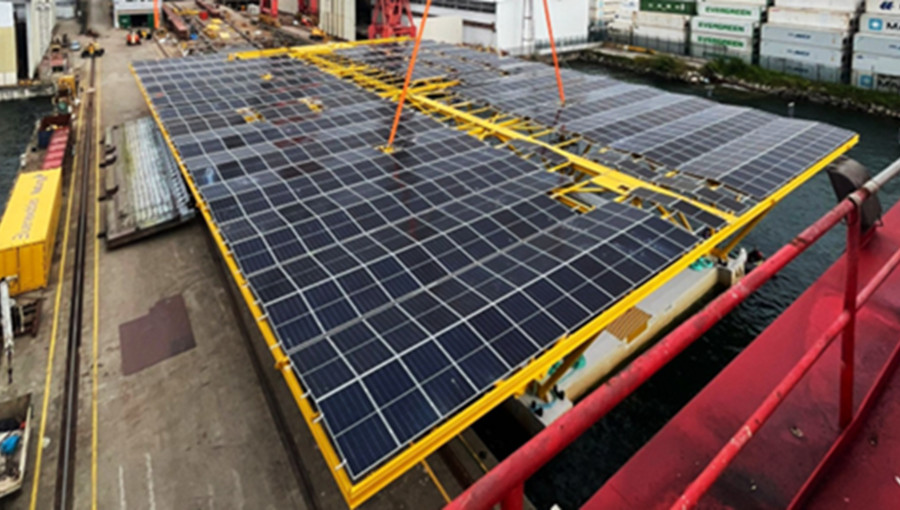
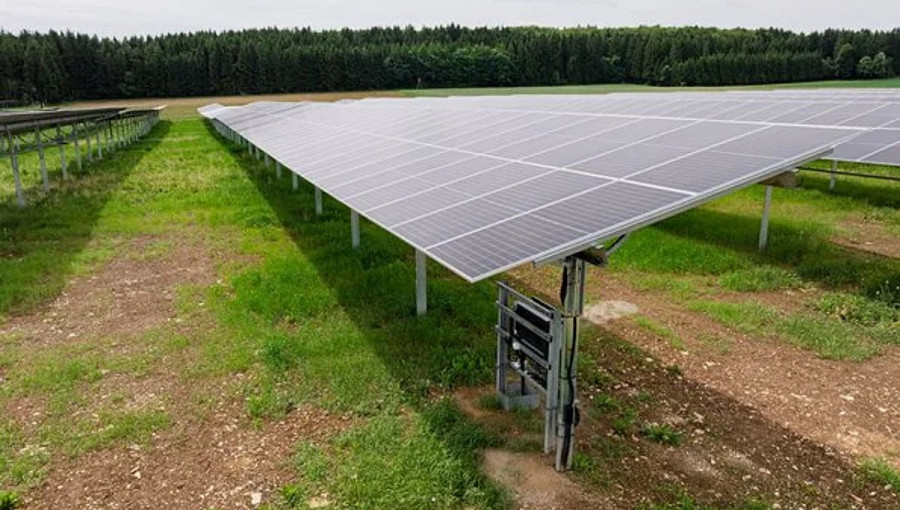
Noria Energy dropped word that work is underway on its latest project, the 50-kilowatt Aurea Solar array taking shape on a water supply reservoir in Golden, Colorado. That’s kilowatts as in kilowatts, not gigawatts or even megawatts. So, why all the fuss over such a modestly scaled project? The proximate cause of the fuss involves Noria’s proprietary AquaPhi solar tracking system. Solar trackers are commonly used to increase the productivity of land-based solar arrays. They guide solar panels into a series of optimal sun-gathering positions during the course of the sun’s journey across the sky. The floating solar industry is a relatively new development in the PV field, requiring its own suite of water-specific hardware. Solar trackers have not been high on the to-do list, and that’s where Noria has spotted an opening.
The Colorado array will be the first time Noria has deployed the AquaPhi system in the US. “AquaPhi® allows floating solar systems to track the sun across the sky, by rotating the solar islands, increasing the system’s energy output by 10–20%,” Noria explains. According to the company, the new tracking system does not require a purpose-built floating solar array. It can be slipped into plans for new solar projects, and it can be added to existing projects as a retrofit. If all goes according to plan, the Colorado project will help improve the economic case for the deployment of floating solar arrays in water systems at the large end of the scale, in addition to small-scale applications.
The 50-kilowatt pilot project will be situated on Fairmont Reservoir, where it will provide Consolidated Mutual Water Company with a zero-emission source of energy for its operations. CMWC is also looking forward to benefiting from the shade cast by the solar panels, which will save water that would otherwise be lost to evaporation. The idea of situating solar panels on water supply reservoirs has already begun to catch on in the US, though slowly. Water system operators squeezed for space are among the interested parties. Even the US Department of Defense has been getting into the act. Noria aims to spur the trend along with the Fairmont Reservoir demonstration, which should be up and running within the next few weeks.
Noria’s timing is right on the button. Despite the sudden shift in federal energy policy this year, signs of fresh momentum in the floating solar field are beginning to materialize. In Texas, for example, earlier this month, the Houston-based floating solar startup Third Pillar Solar announced that it will investigate the potential to locate 500 megawatts of floating solar panels in a reservoir system operated by Diamond Infrastructure Solutions, with a focus on water conservation as well as clean energy. “The initiative marks the beginning of one of the largest floating solar undertakings in the Americas, leveraging technology designed to conserve an estimated 15% of freshwater typically lost to evaporation,” Third Pillar noted in a press statement on August 18.
“The comprehensive floating solar initiative represents a potential investment exceeding $700 million and is expected to generate up to 500MW of clean energy — all while minimizing land development and helping conserve approximately 15% of freshwater currently lost to evaporation in a fast-growing, water-stressed region,” the company emphasized. If all goes according to plan, Third Pillar anticipates that it will
https://cleantechnica.com/2025/08/28/why-is-a-tiny-floating-solar-project-making-such-big-waves/