Renewable Energy Offers Path To True National Security
The traditional concept of energy security through fossil fuels is being challenged by experts who argue that oil dependency actually undermines national stability. While consumers focus on prices at the pump, billions in taxpayer funds are diverted to military operations to protect global oil routes. In contrast, renewable energy sources like wind and solar panels offer a path to genuine independence. Because these resources are domestic and geopolitically inert, they remain unaffected by international conflicts, providing a more stable and cost-effective foundation for long-term economic and national security.
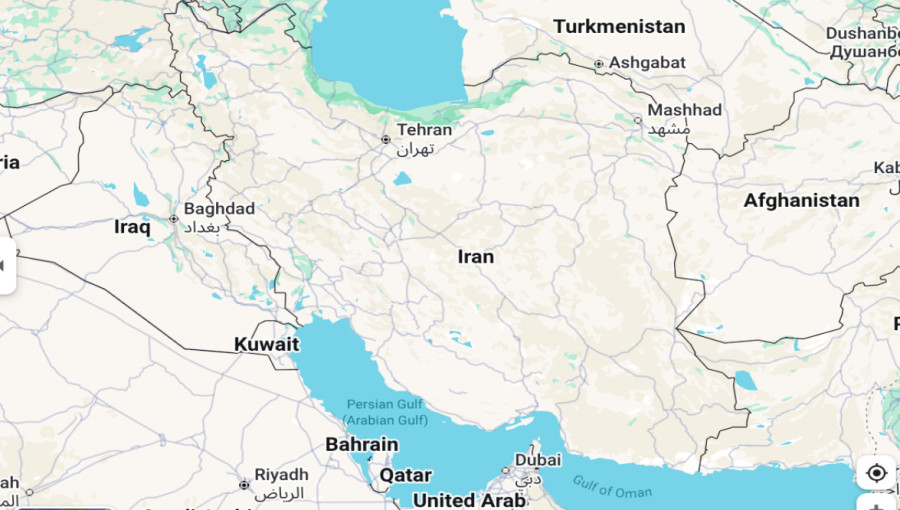
Andrew Dessler, a professor of atmospheric sciences at Texas A&M, points out that the debate over energy costs often ignores massive hidden subsidies. Beyond the trillions of dollars linked to climate change and CO2 emission impacts, the fossil fuel industry benefits from significant military protection. According to Securing America’s Future Energy, approximately one-fifth of the Department of Defense’s base budget is dedicated to securing oil transit through critical choke points such as the Strait of Hormuz and the Suez Canal.
The United States currently spends over $81 billion annually to safeguard the global oil supply. This expenditure, which is not reflected in the retail price of gasoline, effectively acts as a taxpayer-funded subsidy. Experts estimate this cost adds the equivalent of $11 per barrel—about 28 cents per gallon—to the real price of oil. These figures only represent peacetime readiness; the financial burden escalates dramatically during active conflicts, such as the 2003 Iraq War, which carried an estimated cost of $3 trillion.
Despite being a leading oil producer, the U.S. remains economically vulnerable because oil is a globally priced commodity. Disruptions anywhere in the world immediately drive up domestic prices. Recent escalations in the Middle East have demonstrated this volatility, with oil and LNG prices surging following military strikes. In contrast, the operational costs of a solar panel or a wind turbine are entirely decoupled from foreign policy crises. The "fuel" for these technologies is free, local, and immune to geopolitical manipulation.
This strategic advantage is driving global policy shifts. China, for instance, is aggressively promoting electric vehicles and renewable infrastructure to mitigate the risks associated with importing oil. Meanwhile, recent attacks on energy installations have disrupted LNG exports from Qatar, leaving nations from India to Italy facing sudden energy crises. Nobel laureate Paul Krugman argues that relying on the sun and wind is infinitely safer than depending on fuels that must traverse dangerous war zones or be subject to the whims of volatile political regimes.
Ultimately, the transition to renewable energy is framed not just as an environmental necessity, but as the only credible path to economic security. While fossil fuels powered the last two centuries, the next chapter of energy history relies on sources that cannot be cut off by a missile strike or a closed shipping lane. True energy independence requires moving away from the "drill, baby, drill" mentality toward a decentralized, renewable-based grid.