Silbat Molten Silicon Battery To Power Military Infrastructure
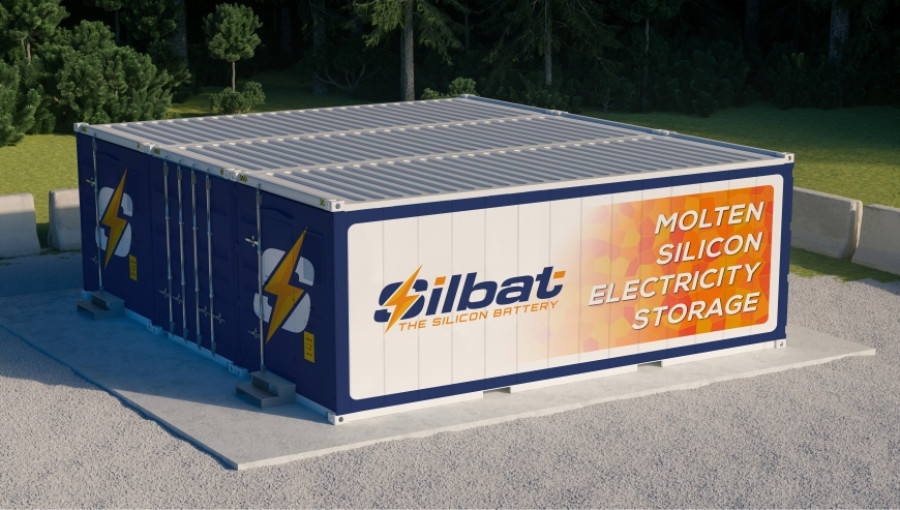
Spanish startup Silbat is advancing its long-duration energy storage technology through the ARMIC project, which aims to provide critical military infrastructure with up to 14 days of uninterrupted power. By utilizing the high latent heat of molten silicon, the company’s battery systems offer a resilient alternative to traditional grid dependence. Supported by €3.4 million in government funding, the initiative brings together a consortium of industrial and academic partners to move this innovative thermal storage solution toward full commercial deployment and national energy sovereignty.
Silbat’s proprietary technology leverages metallic-grade silicon, a cost-effective and abundant material, to store electricity as latent heat. The system functions by converting electrical energy into thermal energy via resistive heating within a specialized refractory container. Once the temperature reaches 1,410 °C, the silicon undergoes a phase change into a molten state, effectively charging the battery. This method capitalizes on silicon’s exceptional latent heat of fusion, which is among the highest of any element, ensuring efficient energy retention for extended periods.
The Research and Analysis of Long-Duration Energy Storage for Operational Resilience in Critical Military Infrastructure (ARMIC) project represents a significant step in applying this technology to strategic defense needs. Over a three-year period, the initiative will focus on creating self-sufficient energy ecosystems for military installations, mitigating the risks associated with civilian power grid failures. Beyond providing electricity, the system is designed for cogeneration, utilizing integrated heat storage to meet various heating and cooling requirements, thereby increasing overall efficiency and reducing operational costs.
Currently positioned at a Technology Readiness Level (TRL) of 7–8, the battery technology is undergoing final refinements before full-scale commercialization. The ARMIC project involves a robust collaboration between industrial partners such as GFM, Schunk, RBZ, and Esteyco, alongside academic institutions including the Institute of Solar Energy at the Polytechnic University of Madrid (IES-UPM). These partners contribute specialized expertise ranging from graphite-based materials to the assembly of advanced TFV modules.
The project is backed by a €3.4 million grant from CDTI Innovación, an agency under the Spanish Ministry of Science, Innovation and Universities. Out of more than 300 competing proposals, the ARMIC project received the highest evaluation score, underscoring its potential to strengthen Spain’s technological autonomy. While the current focus remains on military resilience, Silbat intends to adapt this long-duration storage solution for civilian applications, providing a versatile tool for broader energy stability.