Solar Panels Shield Crops Better Than Traditional Windbreaks
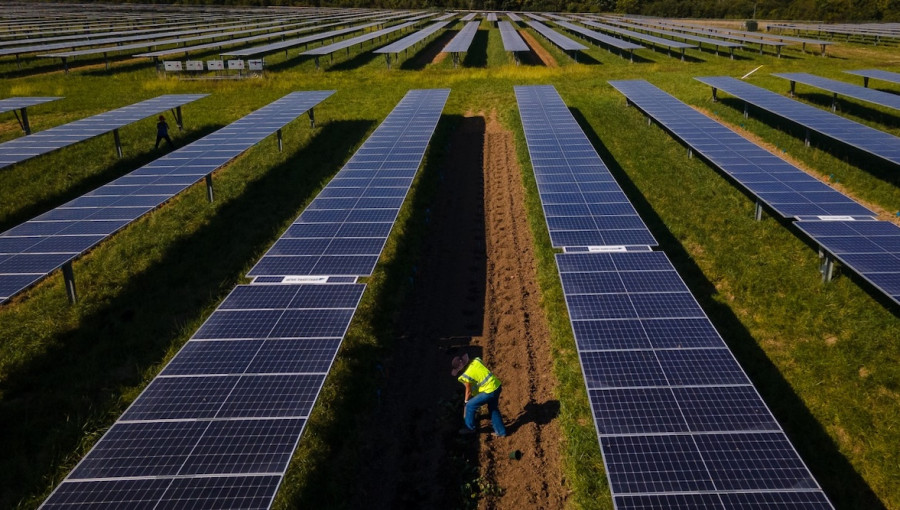
Recent research from Cornell University suggests that agrivoltaic systems—the dual use of land for both solar energy and agriculture—offer a superior alternative to traditional windbreaks for protecting crops and soil. A study published in the journal Agricultural and Forest Meteorology reveals that solar panels can significantly reduce wind speeds, mitigating the effects of wind erosion which costs the American agricultural sector over $9 billion every year. By utilizing dynamic tracking systems, these solar arrays provide a flexible and efficient method for microclimate control, outperforming natural barriers like trees and shrubs in both soil conservation and land-use efficiency.
The study, conducted by researchers at the Sibley School of Mechanical and Aerospace Engineering, utilized computational fluid dynamics (CFD) to analyze how airflow interacts with various solar panel configurations. While farmers have historically used rows of trees to shield crops, these natural windbreaks often compete with produce for water and nutrients, and their effectiveness is limited by their fixed nature. In contrast, agrivoltaic installations can be engineered to optimize airflow without the same resource competition, providing a high-tech solution to a perennial farming challenge.
According to the Cornell team, wind damage varies based on speed, duration, and crop species, but well-designed windbreaks are known to increase wheat yields by 5% to 25% in sheltered zones. The researchers found that solar panels, when placed perpendicular to the wind, provide exceptional protection. Specifically, a configuration featuring a lowered front row in a tilted solar array achieved a 50% reduction in wind speed across 90% of the protected area when faced with inlet wind speeds of 35 meters per second.
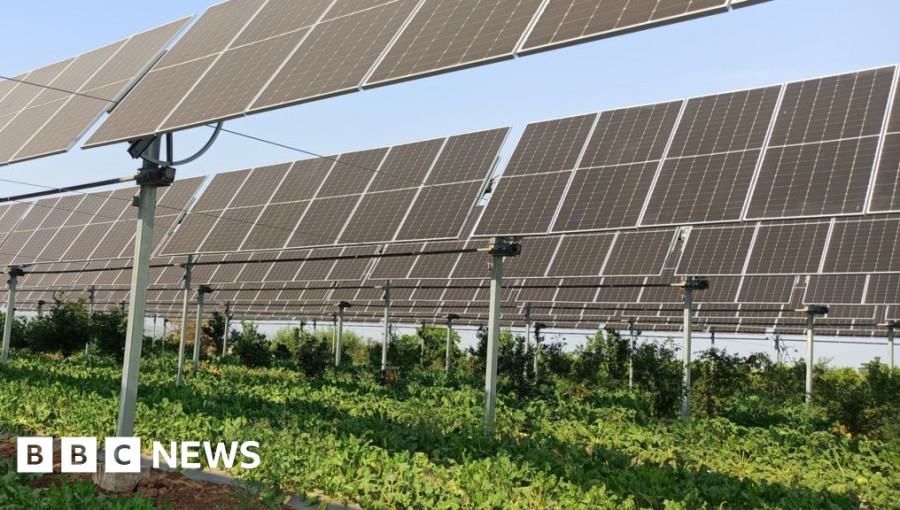
A significant advantage of agrivoltaic systems is the use of single-axis tracking solar modules. Unlike static natural windbreaks, these panels can be adjusted dynamically. During periods of high wind, the panels can be tilted to block the flow and protect fragile topsoil and young plants. Conversely, in humid conditions like those found in the Northeastern United States, the panels can be positioned to allow for increased aeration, which is essential for preventing crop loss due to mildew and other moisture-related diseases.
The integration of solar panels into active farmland also addresses the economic pressures facing modern farmers. As land-use trade-offs become more contentious, the revenue generated from solar energy provides a financial buffer against fluctuating commodity prices and rising operational costs. This income can prevent the permanent sale of agricultural land for commercial or residential development. Because solar hardware is non-intrusive and can be removed after its 20 to 35-year lifespan, the land remains viable for future full-scale agricultural use.
Beyond wind protection and financial stability, agrivoltaic systems contribute to broader environmental goals. These installations have been shown to enhance biodiversity by creating pollinator habitats and can be integrated with livestock grazing. Compared to traditional energy crops like corn for ethanol, solar arrays require less intensive management, reduce the need for chemical treatments, and avoid the heavy infrastructure associated with biofuel refineries. This study provides a vital framework for planners to maximize land productivity while safeguarding the ecological health of the soil.