US Renewables Set Historic Records Amid Global Crisis
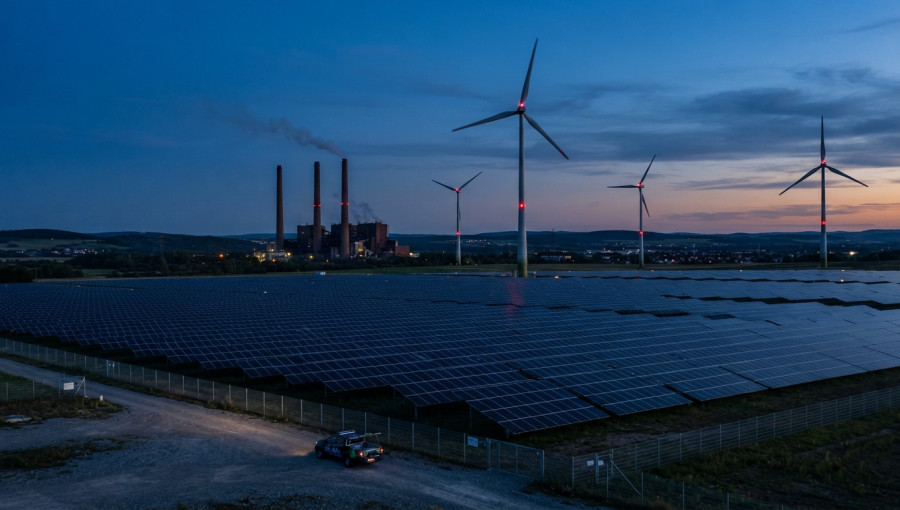
The United States has entered a transformative period for renewable energy, with the spring of 2026 seeing unprecedented records in wind and solar generation. Driven by significant capacity additions in 2025, regional grids from Texas to New England are reporting peak performance, occasionally pushing fossil fuel reliance to historic lows. Despite these clean energy milestones, the broader energy landscape remains volatile. A deepening conflict in the Middle East is triggering a global supply crisis, while American consumers face sharply rising electricity bills due to infrastructure costs and climate-related grid recovery efforts.
Texas continues to solidify its position as a leader in the clean energy transition. On March 14, the Electric Reliability Council of Texas (ERCOT) reported a record-breaking 28.7 gigawatts of wind power generation. This achievement is part of a broader trend across the state, which has also seen its solar generation reach multiple new heights this year. Beyond Texas, the Southwest Power Pool, PJM Interconnection, and the Midcontinent Independent System Operator (MISO) have all logged record-breaking solar outputs. In New England, ISO-NE achieved a new pinnacle for wind generation, while California utilized its massive battery storage capacity to dispatch record levels of clean energy throughout the month of March.
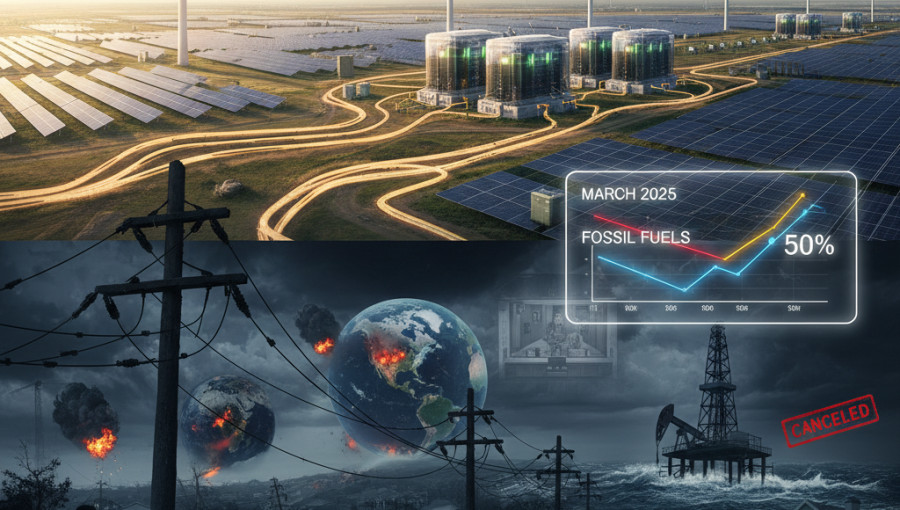
These technical milestones are the direct result of a massive expansion in utility-scale infrastructure. In 2025 alone, the U.S. integrated 26.5 gigawatts of utility-scale solar power and 5.7 gigawatts of wind generation into the national grid. This expansion was supported by the installation of 13 gigawatts of battery storage, which allows for more efficient management of intermittent renewable sources. The impact of this growth was most evident in March 2025, when clean energy sources accounted for more than half of the country's total power production for an entire month—a first in American history. This shift is particularly pronounced in the spring when moderate temperatures reduce the demand for both heating and air conditioning, allowing renewables to meet a larger share of the load.
While domestic renewables are flourishing, the international energy market is grappling with severe instability. Ongoing military escalations in the Middle East have severely disrupted oil and gas production and transport. While the U.S. has utilized domestic natural gas to mitigate the immediate impact, other nations are taking drastic measures to manage the shortage. Thailand has encouraged a shift in professional attire to reduce air conditioning demand, and Sri Lanka has moved to a four-day workweek to conserve fuel. In the European Union, energy officials are urging citizens to reduce air travel and driving while accelerating the shift to wind and solar to escape the inherent price volatility of fossil fuels.
Despite the growth of cheaper renewable sources, American households are facing higher electricity costs. A joint report from the Lawrence Berkeley National Laboratory and the Brattle Group indicates that average residential prices surged by 33% between 2019 and 2025. These increases are primarily driven by rising distribution expenses and the high cost of repairing grids damaged by extreme weather, rather than the cost of power generation itself. While 29 states saw inflation-adjusted prices fall, costs spiked significantly in California, Illinois, and parts of the Northeast.
The energy transition also faces complex regulatory and social challenges. The Endangered Species Committee recently ruled that federal protections will no longer apply to certain oil and gas drilling projects off the Gulf Coast, potentially endangering the Rice’s whale. Additionally, the industry is closely watching the development of next-generation geothermal projects, which promise 24-hour clean power but face significant hurdles regarding permitting and safety reforms. Meanwhile, the fate of hundreds of clean energy projects remains uncertain following the cancellation of several Department of Energy grants, leaving many developers in a state of financial limbo.