Solar Powered Drone Sets Five Hour Endurance Record
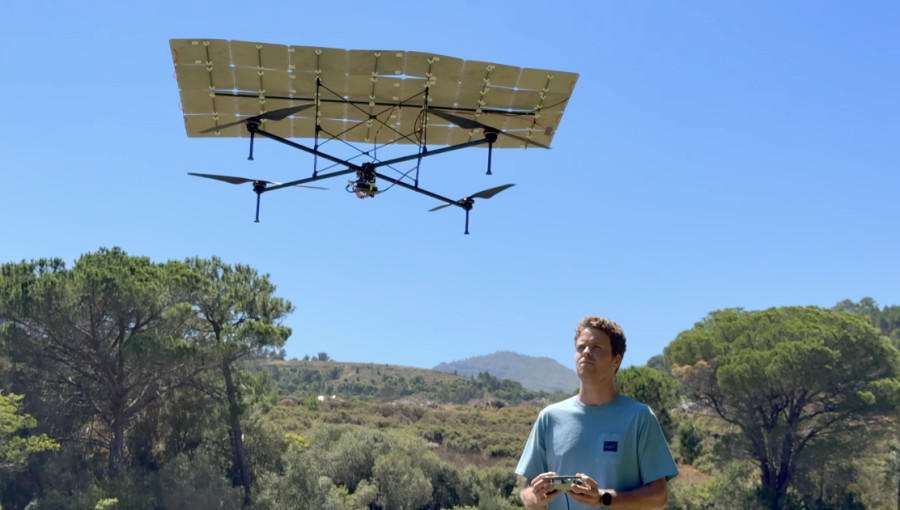
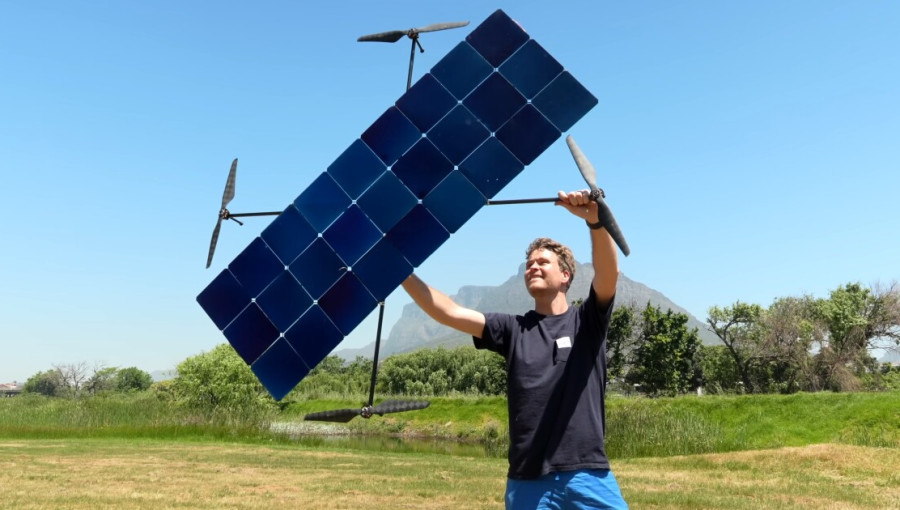
Luke and Mike Bell have established a new unofficial endurance record for electric multirotors, successfully flying a custom solar-powered drone for 5 hours, 2 minutes, and 21 seconds. Best known for their world-record-breaking high-speed racing drones, the father-son duo transitioned to endurance testing to demonstrate the potential of solar-assisted flight. By utilizing an array of 28 solar panels, the craft generates enough energy to sustain a hover while charging a small backup battery, potentially paving the way for long-range applications in agriculture, surveillance, and mapping.
The record-breaking flight marks a significant milestone for the Bells, whose previous work focused on the Peregreen series of racing drones. Those models have repeatedly set Guinness World Records for battery-powered RC speed, reaching 656.6 kilometers per hour in early 2026. This latest project, however, prioritized efficiency over velocity. Luke Bell had previously set an unofficial hover record of 3 hours and 31 minutes using high-density nickel-manganese-cobalt (NMC) batteries and 101.6-centimeter propellers, but the integration of solar technology has pushed those limits even further.
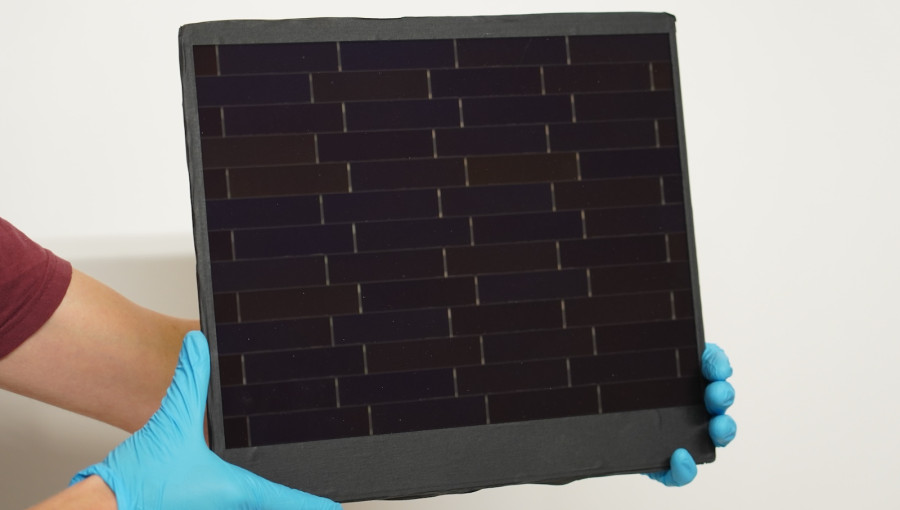
The solar-powered multirotor is built on a lightweight carbon fiber X-frame chassis. The current iteration features 45.72-centimeter propellers and 28 solar panels wired in a series. Under optimal sunlight, the array generates approximately 110 watts, which comfortably exceeds the 70 watts required for the drone to maintain a hover. The surplus energy is diverted to an auxiliary battery, which acts as a buffer. This hybrid system uses diodes to prevent backflow and ensures that the drone remains stable even when clouds or wind gusts temporarily reduce the solar output.
The development process involved significant trial and error. The first prototype lacked a battery entirely, relying solely on real-time sunlight, but it crashed after just three minutes due to a gust of wind. For the second version, the team reduced the weight by approximately 70.87 grams and implemented thermoplastic polyurethane (TPU) sleeves to secure the solar panels more effectively. These refinements allowed the drone to stay airborne until the pilot eventually chose to land due to fatigue, rather than power depletion.
According to Luke Bell, the ultimate goal is to achieve indefinite flight. While fixed-wing aircraft like the Airbus Zephyr S have stayed aloft for 64 days, maintaining a multirotor in the air is far more energy-intensive. Bell suggests that future versions could utilize an eVTOL (electric vertical take-off and landing) design, where the solar panel array doubles as a wing. This would reduce the power required to stay airborne to just 10% of what is needed for a hover, theoretically allowing the drone to fly through the night on a small battery until the sun rises again.
The practical implications for this technology are broad. By eliminating "battery anxiety," solar drones could operate for hundreds of kilometers per day without needing to land for a recharge. This makes them ideal candidates for industrial use in mining, large-scale agricultural monitoring, and persistent surveillance. As solar cell efficiency improves beyond the current 20-25% range, the Bells anticipate even greater breakthroughs in autonomous, long-endurance flight.