
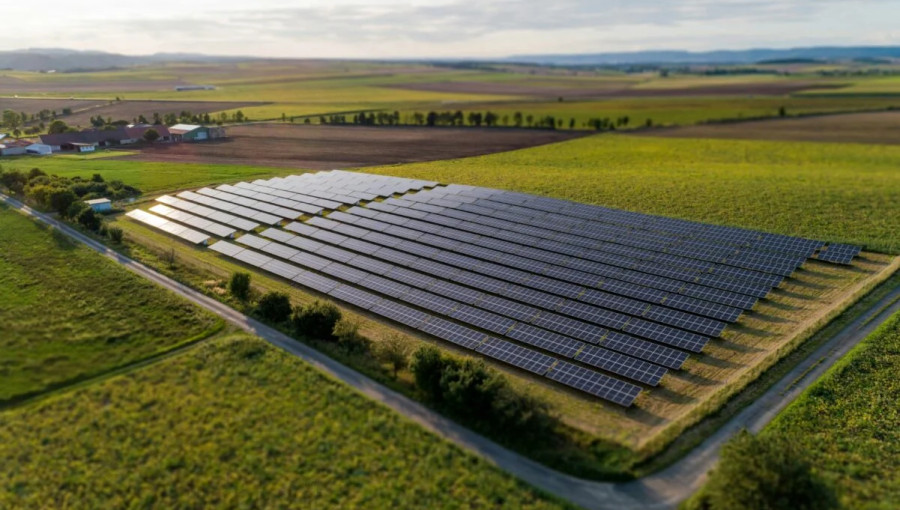
The levelised cost of electricity (LCOE) for fixed-tilt solar PV has experienced an unusual 6% increase between 2024 and 2025, according to the latest report from Bloomberg New Energy Finance (BNEF). Now sitting at US$39/MWh, solar remains the most cost-effective power generation source globally, beating out both wind and fossil fuels. While higher interest rates and grid challenges have caused this temporary price adjustment, the long-term economic outlook for solar remains robust, especially as battery energy storage systems (BESS) continue their rapid price decline, creating a powerful synergy for the renewable energy sector.
Bloomberg New Energy Finance’s latest analysis highlights that while solar power costs have ticked upward, the technology maintains a significant competitive advantage. At US$39/MWh, the cost of solar is less than half that of combined cycle gas turbines (CCGT), which average US$102/MWh, and a mere fraction of the US$258/MWh associated with conventional nuclear power. Onshore and offshore wind also saw LCOE increases during the same period, reaching US$40/MWh and US$100/MWh respectively, reflecting a broader trend of rising production costs across the renewable landscape.
The primary drivers behind this “anomalous” price hike include rising capital costs and specific market pressures such as power price cannibalisation and curtailment. Analysts note that long-term interest rates for renewable project financing in Europe did not drop in tandem with policy rates, making debt acquisition for new solar modules and wind farms more expensive. These factors led BNEF to adjust its 2025 forecast, which previously anticipated solar LCOE falling to US$35/MWh.
Despite the recent uptick, the historical trajectory of solar remains impressive, with the LCOE plummeting by 97% since 2010. Experts suggest that the 2025 increase is a minor fluctuation in a market that has grown substantially. However, the industry is reaching a point of maturity where BNEF predicts 2026 could be the first year that new solar capacity installations fail to exceed the previous year’s record.
In contrast to solar and wind, battery energy storage systems (BESS) have continued their downward price trend. The LCOE for four-hour standalone battery projects fell by 27% to US$78/MWh in 2025, outperforming initial expectations. BNEF projects that battery costs will drop further to US$58/MWh by 2035, making them cheaper than offshore wind within a decade.
The diverging price paths of solar and storage are creating what experts call a “world-changing megatrend.” As solar module deployment continues globally, it creates more frequent opportunities for batteries to charge at low costs, providing much-needed revenue stability in volatile energy markets. While the manufacturing of batteries remains fiercely competitive and commodity-driven, their role in complementing solar power is expected to drive the next phase of the global energy transition.