Spain Embraces Agrivoltaics in Updated Agricultural Policy

Spain has officially updated its national common agricultural policy (PAC) to include agrivoltaic systems, allowing these projects to qualify for agricultural subsidies. This change, which modifies royal decree 1048/2022, aligns with new regulations from the European Commission adopted earlier this August that revise the PAC framework for the upcoming years.
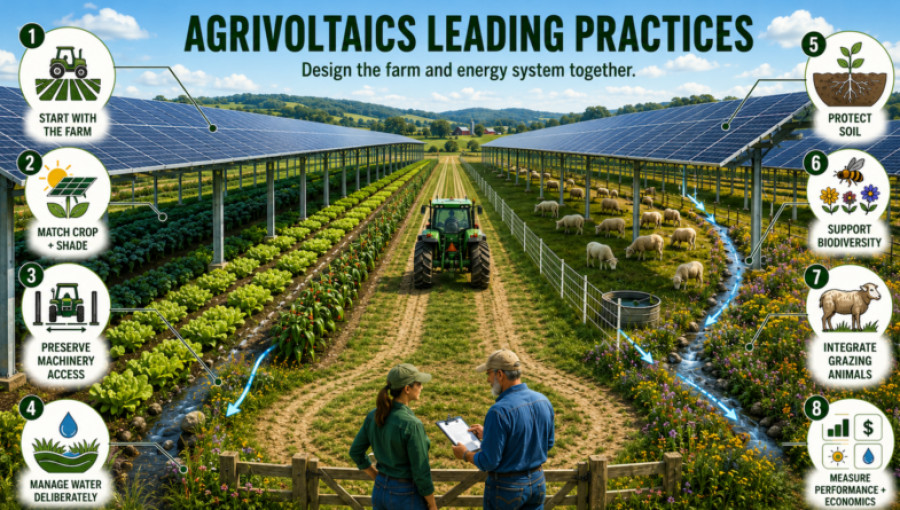
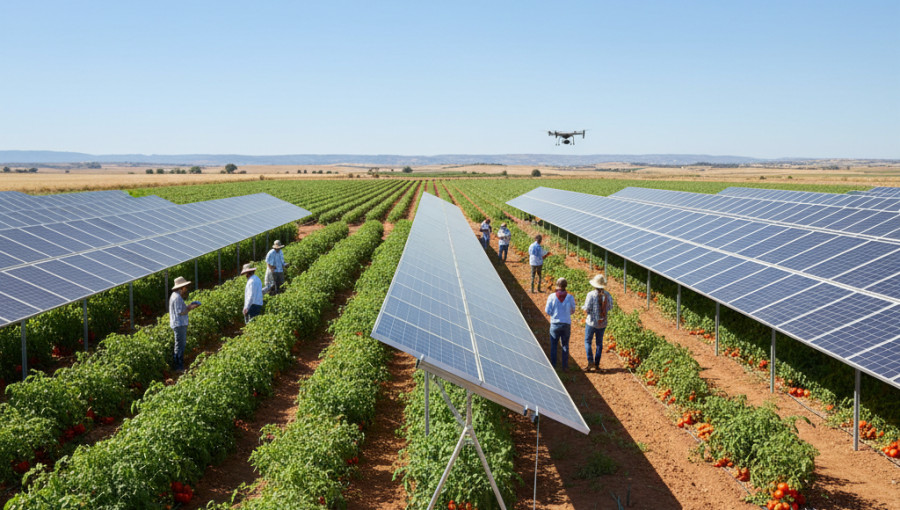
Under the amended decree, agrivoltaic installations will have the entire area of cultivated land recognized as eligible for subsidies. However, the specific criteria for accessing these funds have yet to be defined and will be delineated through subsequent regulatory developments. This acknowledgment of the dual use of agricultural land for both farming and solar energy production has been positively received by the Spanish Photovoltaic Union (UNEF). Martín Behar Kölln, UNEF's director of research, regulatory, and environmental affairs, stated on LinkedIn that this regulatory advancement is a significant political milestone, anticipated to enhance agricultural yields, bolster climate resilience, and promote energy independence in rural communities. Furthermore, UNEF plans to continue fostering the application of agrivoltaics and expanding its use in livestock farming.
Spain's decision stands in contrast to Italy's recent ban on ground-mounted solar photovoltaic (PV) projects on agricultural land, as well as the U.S. Department of Agriculture's removal of solar and wind projects from its Rural Development Business and Industry Guaranteed Loan Program. Meanwhile, the potential for dual-use land in agrivoltaics is expected to catalyze solar PV growth in Germany, with a report from the Fraunhofer Institute projecting that 500 GW of new agrivoltaic capacity could be installed on prime agricultural land in the country.