Specialized Insurance Secures Bankability For European Battery Storage

As the European energy landscape matures, the primary challenge for battery energy storage systems (BESS) has shifted from technical feasibility to financial risk management. With margins tightening across Central, Eastern, and Western Europe, the bankability of storage projects now depends on maintaining financial continuity through every phase of development. Specialized insurance has emerged as a critical strategic tool, protecting investors from revenue losses during transport, construction, and operation. By securing income streams against unforeseen delays, these financial safeguards are becoming essential for the successful deployment of large-scale energy storage assets.
The transition of battery storage from a technical innovation to a stable financial asset class has introduced a lower tolerance for uncertainty. In the current market, technical performance represents only half of the success equation; the other half is the preservation of cash flow. Disruptions during the early stages of a project, such as a damaged transformer during shipping or a fire incident during commissioning, can have catastrophic financial consequences. While physical repairs are costly, the resulting delay in revenue generation—while debt service and contractual obligations continue to accrue—poses the greatest threat to a project's viability.
To address these vulnerabilities, the industry is increasingly turning to Advance Loss of Profit (ALOP) insurance. Once considered an optional add-on, ALOP is now a cornerstone of bankability for large-scale BESS and hybrid projects involving solar panels and storage. This coverage protects projected revenues when physical damage during construction or testing delays the start of operations. By bridging the gap between construction risks and future cash flows, ALOP ensures that minor setbacks do not evolve into full-scale financial crises or trigger punitive penalty clauses.
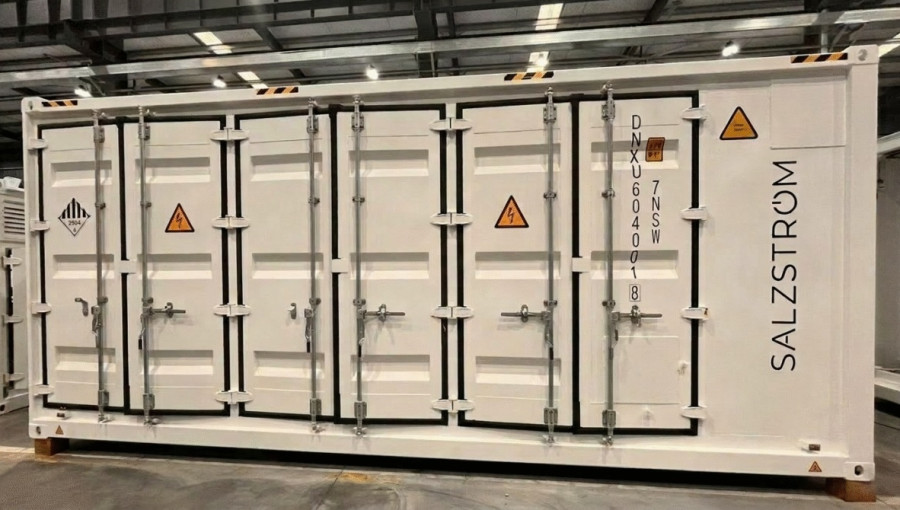
Logistics remains one of the most exposed phases of the project lifecycle. Batteries, inverters, and heavy equipment often travel thousands of kilometers before reaching their destination. A single incident during transit can postpone grid connection by months. To mitigate this, developers are pairing Cargo coverage with Delay in Start-Up (DSU) insurance. This combination compensates projects not only for the cost of replacing damaged hardware but also for the income lost during the resulting downtime, closing a dangerous financial gap that exists before operations even begin.
The construction and commissioning phase is where technical and financial risks converge most sharply. Standard insurance policies often lack the nuance required for the complexities of battery testing and grid integration. Modern risk management strategies now utilize DSU coverage that extends from the initial installation through the final commissioning phase. This transforms insurance from a reactive repair mechanism into a strategic stabilizer that keeps investor expectations and debt schedules aligned, even when technical failures occur during high-stakes testing periods.
Once a project is operational, the focus shifts to protecting the specific revenue models that sustain it. Traditional Business Interruption insurance frequently fails to account for the sophisticated income structures of modern storage, such as tolling or profit-sharing arrangements. Tailored policies now focus on protecting total income rather than just net profit, offering extended indemnity periods of up to 18 months. This comprehensive approach ensures that the project's ability to earn remains intact, which is fundamental to maintaining long-term lender support.
Furthermore, early design decisions are proving to have a significant impact on a project’s ultimate bankability. Choices regarding battery suppliers, container layouts, and control systems directly influence the availability and pricing of insurance. Integrating risk expertise during the initial design phase allows developers to identify potential issues when they are still inexpensive to correct. Projects that address these factors early consistently secure broader coverage and more favorable financing terms compared to those that seek insurance as an afterthought.
As Europe accelerates its transition toward renewable energy, the ability to manage financial volatility will determine which storage projects move forward. In 2025 alone, more than 8 GWh of BESS capacity across the continent was secured through revenue-focused risk management strategies. By prioritizing income protection and aligning coverage with actual market models, the industry is building the resilience necessary to support the next generation of European energy infrastructure.