
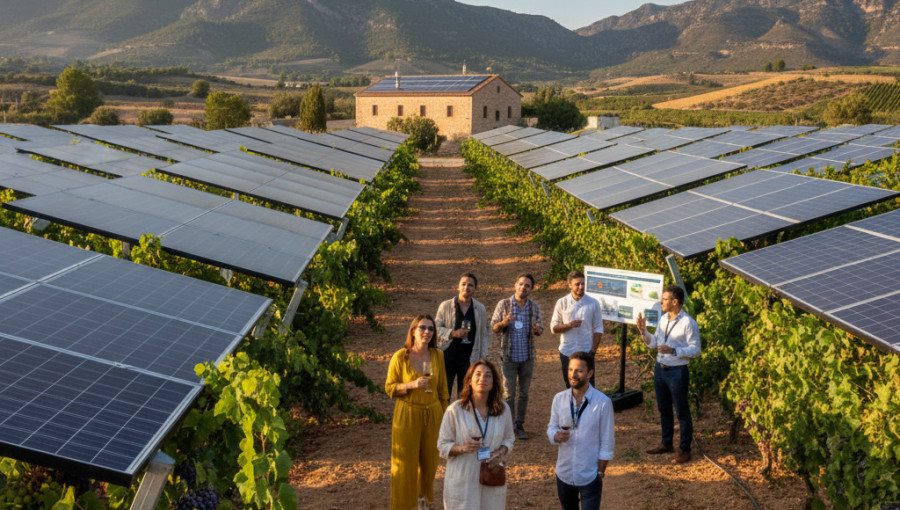
A recent study in the Murcia region of Spain has revealed significant public support for agrivoltaic systems in vineyards. Researchers from the Technical University of Cartagena and Miguel Hernández University surveyed 238 wine tourists, finding that 94% of participants approved of integrating solar panels into vineyard trellises. The study indicates that most visitors do not perceive a conflict between renewable energy infrastructure and the traditional agricultural landscape. These findings suggest that agrivoltaics could serve as a sustainable dual-use land model for wine-producing regions worldwide.
The research focused on the Murcia region, a vital hub for Spanish viticulture that covers over 20,900 hectares and generates approximately €157 million in annual export revenue. To gauge social acceptance, tourists were taken on guided tours of pilot installations where the benefits and potential drawbacks of agrivoltaic systems were explained. The study specifically examined four low-height, vertically integrated configurations designed for trellis vineyards, with solar module heights ranging from 1.8 meters to 2.4 meters.
According to the lead author, Javier Padilla Martínez, the high level of acceptance is largely attributed to the low-profile nature of trellis-integrated structures. While the study centered on vineyards, the researchers believe these positive trends could be extrapolated to other crops where stakeholders are particularly sensitive to visual changes in the landscape. The survey results showed that age, income, and place of residence did not significantly impact opinions, though differences were noted based on gender, educational background, and existing environmental awareness.
Beyond visual aesthetics, the survey highlighted a strong consensus on the necessity of generating solar energy on agricultural land. Participants who demonstrated higher environmental awareness, often measured by their willingness to pay more for sustainably certified wine, were among the most supportive of the technology. This suggests that agrivoltaic implementation could potentially enhance the brand value of wineries committed to sustainability.
The findings, published in the journal Renewable Energy Focus, underscore the potential for agrivoltaics to resolve land-use conflicts. By combining energy production with grape cultivation on the same plot, the model offers a path toward meeting renewable energy targets without sacrificing productive agricultural space. The researchers emphasized that the ethical and legal framework of the study was strictly validated to ensure the accuracy and reliability of the social data collected.