BYD To Launch Solid State Batteries In 2027
BYD, the world’s leading electric vehicle manufacturer, is poised to begin limited production of solid-state batteries as early as 2027. After more than a decade of research, the company has achieved significant breakthroughs in sulfide-based electrolyte technology, which promises to revolutionize the industry with higher energy density and faster charging capabilities. Initially targeted for high-end models, BYD plans to scale this technology for mass-market vehicles by the end of the decade, joining a global race to commercialize what many consider the next frontier in battery efficiency.
The shift toward solid-state technology marks a pivotal moment for BYD, which has been developing these advanced chemistries since 2013. According to reports from the company’s investor relations department and insights shared by Sun Huajun, the CTO of BYD’s battery division, the automaker has successfully tested battery cells with capacities ranging from 20 Ah to 60 Ah. By utilizing sulfide-based solid electrolytes, BYD aims to offer superior conductivity and stability compared to traditional liquid lithium-ion batteries. This transition is expected to significantly reduce safety risks while enhancing the overall performance of future electric fleets.
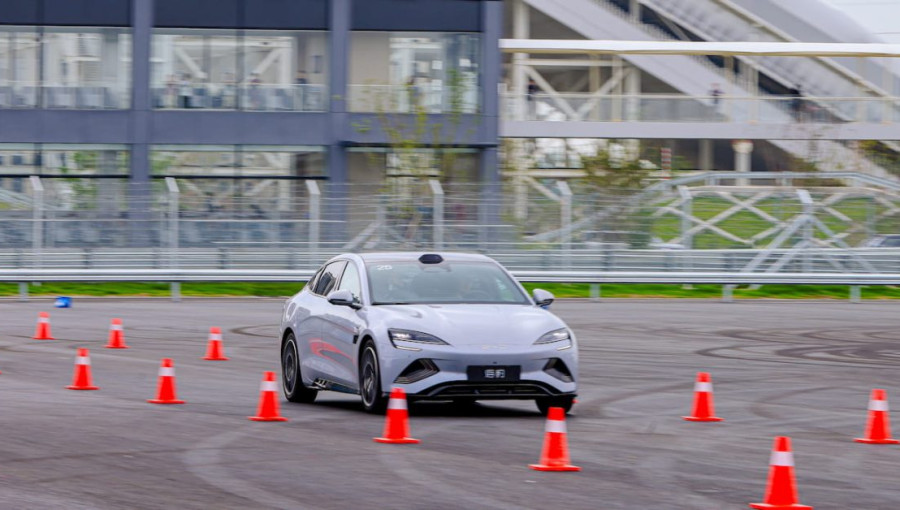
BYD’s roadmap includes a two-year demonstration phase starting in 2027, during which production will remain limited to premium vehicle lines. This strategic rollout allows the manufacturer to refine the manufacturing process before transitioning to full-scale mass production around 2030. While rumors previously suggested that the company was already testing these batteries in its Seal sedan on public roads, BYD has maintained a cautious stance, stating that the official first model and specific technical parameters have yet to be formally announced.
The competition for solid-state dominance is intensifying globally as manufacturers chase the "Holy Grail" of energy storage. Chinese rivals such as FAW Group and Dongfeng Motors have already begun testing prototype vehicles, with Dongfeng claiming a driving range of 1,000 kilometers from its 350 Wh/kg solid-state cells. Meanwhile, Western automakers are making similar strides; Mercedes-Benz recently demonstrated a modified EQS that traveled 1,200 kilometers on a single charge using Factorial’s solid-state technology.
As major players like Toyota, Volkswagen, and Nissan accelerate their own development programs, the industry is approaching a transformative era of electric mobility. These advancements are expected to lower power costs for consumers and further reduce CO2 emissions. BYD’s timeline aligns with the broader industry target of 2030 for full-scale commercialization, signaling a major leap forward in making high-performance, long-range electric vehicles a global standard.