Firefighters Recommend Microinverter Solar Systems For Rooftop Safety
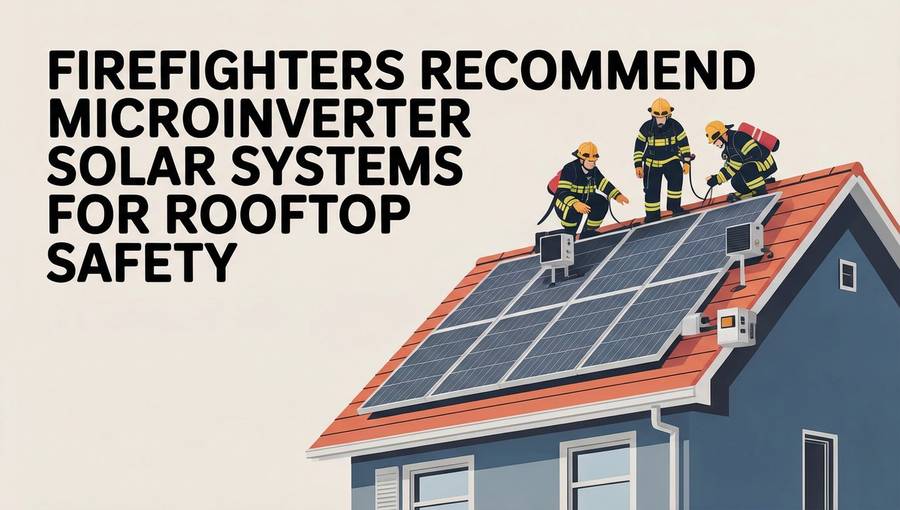
A recent survey conducted by the Solar and Fire Education (SAFE) program reveals that over 98% of firefighters recommend microinverter-based rooftop solar systems for residential installations. Led by retired fire captain Richard Birt, the initiative highlights how an all-AC architecture significantly enhances safety during emergency operations. By converting power at the individual solar module level, these systems eliminate the risks associated with high-voltage direct current (DC) wiring, providing first responders with a safer environment when performing critical tasks like roof ventilation during active structure fires.
The SAFE program, which provides specialized training to fire departments across the United States, released the data to address the growing intersection of renewable energy technology and emergency response tactics. Richard Birt, a 30-year veteran of the fire service, established the program to ensure that traditional firefighting methods evolve alongside modern energy systems. The findings are based on feedback from hundreds of first responders who participated in hands-on training modules developed in consultation with Enphase Energy.
A primary safety concern for firefighters during residential emergencies is the presence of high-voltage DC electricity on rooftops. Traditional string inverter systems often require long runs of DC wiring that remain energized as long as there is sunlight. This creates a persistent electrocution hazard for personnel who may need to walk across a roof or use tools to create ventilation openings. In contrast, microinverter technology converts electricity from DC to alternating current (AC) at each individual solar module. This design ensures that high-voltage DC is confined to the immediate back of the panel rather than traveling through conduits across the building.
The training also emphasizes the importance of rapid shutdown capabilities, a safety standard required by the National Electrical Code (NEC). Rapid shutdown is designed to de-energize solar components within seconds of a system being disconnected, protecting emergency crews from accidental shocks. Because microinverters integrate this functionality at the panel level, they do not require additional external hardware like DC optimizers or separate rapid shutdown transmitters. This simplified architecture reduces potential failure points and ensures the system is inherently compliant with safety regulations.
The impact of these findings is already influencing official fire service protocols. Captain Andrew Martinez of the San Mateo Consolidated Fire Department noted that his agency is currently integrating these insights into its Safety Policy and Guidelines manual. By prioritizing systems that minimize high-voltage DC runs, departments aim to reduce the inherent risks faced by firefighters on the front lines. To date, Enphase has deployed over 84.8 million microinverters globally, underscoring the widespread adoption of this safety-focused architecture in more than 160 countries.