New Electrochemical Process Slashes Cement Carbon Emissions Significantly
Researchers at the University of British Columbia have developed an electrochemical method to significantly reduce the carbon footprint of cement production. By replacing traditional high-heat kiln processes with a preheating electrochemical conversion step, the team can produce belite-rich clinker at much lower temperatures. This innovation, which can also utilize recycled concrete as a feedstock, cuts thermal energy demand by approximately 70%. When using recycled materials, the process potentially slashes CO2 emissions by up to 98% compared to conventional manufacturing, offering a promising, scalable pathway toward decarbonizing one of the world’s most essential and carbon-intensive industrial materials.
Cement is fundamental to modern infrastructure, yet its production accounts for roughly 8% of global CO2 emissions, surpassing the aviation industry. Traditional manufacturing involves heating limestone and silica in massive rotary kilns to temperatures as high as 2600 °F (1450 °C). This process is doubly problematic: it requires vast amounts of fossil fuel energy and triggers calcination, a chemical reaction that releases CO2 directly from the limestone. Decarbonizing this sector has proven difficult because the emissions are embedded in both the fuel source and the fundamental chemistry of the material itself.
The new approach, detailed in ACS Energy Letters, utilizes a continuous electrochemical reactor to assemble a precursor material called electrochemically synthesized calcium silicate hydrate (eCSH). By using electricity to drive ion transport, the team can form these precursors at just 140 °F (60 °C). A subsequent heating stage converts this material into belite-rich clinker at 1200 °F (650 °C). While still hot, this temperature is significantly lower than the requirements for standard Portland cement, making the process far easier to power with renewable energy and reducing overall fuel consumption and furnace stress.
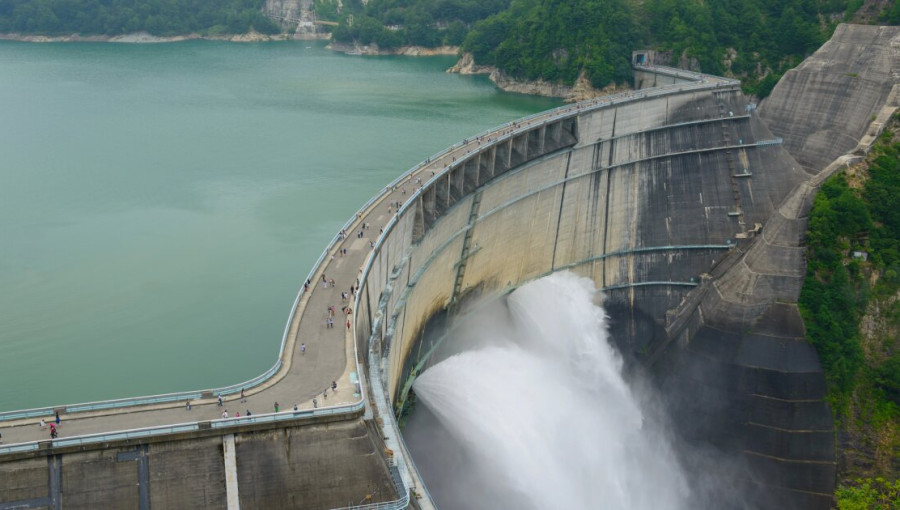
Beyond energy savings, the technology supports a circular economy by allowing demolished concrete to serve as a feedstock. When recycled cement is used, the researchers estimate emissions drop to just 20 kg of CO2 per ton, a massive improvement over the 800 kg typically produced. Furthermore, the electrochemical reaction generates hydrogen gas as a byproduct, which could be captured and burned to provide the thermal energy needed for the final heating stage. While this belite-rich cement is best suited for large-scale infrastructure like dams, the researchers have already filed for patents and are working to commercialize the technology.